
Merisphere Publishing
← Back to the section

Opinion

Cameroon: preparing now for the post-2032 era

Preserving unity, peace and public responsibility
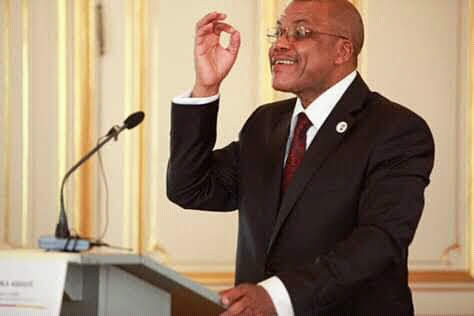
Pierre Mila AssoutePresident of the DMMC/RDMC12 September 2026 · Updated 12 September 2026
Pierre Mila Assoute
Pierre Mila Assoute

Cameroon must prepare for continuity

Cameroon cannot wait until 2032 to think about what comes after 2032. Paul Biya’s re-election in October 2025 for a seven-year term extended a political cycle that began in 1982. It did not remove the questions running through society: how can continuity of the State be guaranteed, national unity preserved and political change made possible without rupture or violence? These questions arise from a collective responsibility. A strong State prepares succession, clarifies powers, protects procedures and builds trust before an emergency forces it to do so.

Fear of tomorrow is a political fact

Rumours fuelled by the Head of State’s prolonged absences, his age and the perceived opacity of some decision-making channels reveal a deeper concern. Part of public opinion doubts who truly decides, under what procedures and with what oversight. The first duty of institutions is therefore to make continuity understandable. The constitutional reform adopted in April 2026 reintroduced a vice-presidency. It can provide lasting reassurance only if its implementation is transparent, its holder is unquestionably lawful and the office does not encourage clan rivalry or suspicions of a privatised succession.

The Republic must be stronger than clans

The debate should not be reduced to the name of a future vice-president, the survival of the CPDM or the personal future of any official. The decisive issue is the Republic to be handed on: predictable rules, an impartial administration, justice that completes its work, monitored public finances and clearly assigned responsibility. Current trials and public accusations must be handled by the competent institutions with respect for the presumption of innocence. The Martinez Zogo case remains a major test. Fighting corruption likewise requires public data, independent oversight, traceable expenditure, reasoned decisions and equal justice.

National unity cannot be decreed

Cameroon’s unity is built every day. It weakens when citizens feel permanently excluded from the State, when territories do not receive comparable services or when public appointments appear to follow affiliation rather than competence. Violence in the English-speaking regions and attacks linked to Boko Haram have different causes and actors, but impose the same rule: protecting civilians and restoring normal life must prevail over permanent confrontation. Dialogue does not erase the State; it is one of the instruments of its strength.

Demographic pressure changes the equation

Cameroon is approaching thirty million inhabitants. People under fifteen account for about two in five residents and children for almost half the population. This youth is a considerable asset, but turns every delay into an emergency: schools, health, training, housing, jobs, transport, energy and digital access. Economic growth close to four per cent does not necessarily raise living standards rapidly when the population is growing strongly, territorial inequalities persist and humanitarian crises absorb resources. Political continuity must therefore mean the ability to offer prospects, not merely the absence of rupture.

Making knowledge a policy of sovereignty

Cameroon has a large young population, universities, entrepreneurs, engineers, artists, researchers and an experienced diaspora. These strengths must be linked to a national production strategy. Artificial intelligence, life sciences, precision agriculture, energy, cultural industries and digital services must become sectors, courses, laboratories, markets and jobs. A knowledge economy complements agriculture, industry and infrastructure. It requires demanding education, better-funded research, reliable public data, intellectual-property protection and rules that allow initiatives to grow.

Preparing the transition without preparing chaos

Cameroon must avoid coups, uncontrolled revolts, communal clashes and any unconstitutional rupture. Rejecting chaos does not mean freezing society. The best prevention is reform before crisis: clarify succession, strengthen checks and balances, secure elections, make the administration accountable and restore trust in justice. Peace is not silence; unity is not uniformity; stability is not immobility. Cameroon will preserve unity and progress beyond 2032 through solutions rather than rupture, reform rather than chaos, and the Republic rather than clans.

Pr Pierre Mila Assoute

Paramount Chief of Mbo

President of the DMMC/RDMC

(This opinion article expresses the position of its author, President of the DMMC/RDMC, on the continuity of the Cameroonian State. It does not constitute a position of Merisphere Publishing. Editor’s note)

← Back to articles

MERISPHERE BRIEFING

Understanding the challenges of political continuity in Cameroon

Factual reference points for reading and discussing the opinion article

Merisphere editorial team

Data and sources current to 12 September 2026

Summary

The debate in Cameroon simultaneously concerns constitutional continuity, political legitimacy, security, public trust and the economy’s capacity to meet the needs of a very young population. The April 2026 reform created a succession route through an appointed vice-president. It reduces legal uncertainty but does not resolve democratic legitimacy, transparent decision-making or territorial and social crises.

Essential reference points

IndicatorValuePeriodSource
Population29.88 million2025World Bank
Population aged 0–1441%2025UNFPA
Children in the population49%2025UNICEF Cameroon
Real GDP growth3.5%2024World Bank
Growth forecast3.8%2025IMF, July 2025
Public debt43.4% of GDPend 2024World Bank
People in need of assistance2.9 million2026OCHA
Beginning of the Biya presidency6 November 1982HistoricalPresidency and corroborating sources
Official 2025 result53.66% for Paul Biya27 October 2025Constitutional Council, reported by Reuters and AP

Reading. Demography is increasing demand for services and jobs faster than the headline growth rate suggests. Humanitarian figures show that institutional stability must also be judged through people’s actual safety.

Recent political timeline

DateEvent
12 October 2025Presidential election.
27 October 2025The Constitutional Council declares Paul Biya the winner with 53.66%; the opposition disputes the poll.
6 November 2025Oath of office for a seven-year term ending in 2032.
4 April 2026Parliament approves the vice-presidency by 200 votes to 18, with four abstentions.
April 2026The appointed vice-president may complete the term if the presidency becomes vacant; the office-holder may neither amend the Constitution nor contest the following presidential election.
12 September 2026The appointment and implementation of the new office remain central to public debate.

What the vice-presidency changes

QuestionAnswer or debate
Method of appointmentAppointment and dismissal by the President of the Republic.
Ordinary functionExercises the powers delegated by the President.
Presidential vacancyCompletes the current term under the adopted arrangement.
Limits of the interimMay neither amend the Constitution nor stand in the following election.
Government’s argumentPrevent rupture and guarantee continuity of the State.
Main criticismRisk of concentrated power and weak legitimacy for a successor not elected by presidential suffrage.

Demographic and economic pressures

PressurePolitical effectResponse tool
Young populationContinuous large-scale demand for schools, health care, training and first jobs.Multi-year planning and public measurement of results.
Moderate growthGDP gains may be partly absorbed by population growth.Track GDP per capita, productivity and job quality.
Public debtDebt service reduces room for investment and services.Publish commitments, maturities and fiscal risks.
Poverty and inequalityThe World Bank estimates that more than ten million Cameroonians live in poverty.Target territories and measure effective access to services.
Humanitarian crisesAn estimated 2.9 million people need assistance in 2026.Protect civilians and connect emergency action, restored services and political solutions.

Crises testing national cohesion

AreaIssueStructural response
North-West and South-WestSeparatist conflict, violence against civilians, displacement and lasting disruption of schooling.Civilian protection, criminal accountability, political dialogue and restored services.
Far NorthBoko Haram and associated groups, with cross-border insecurity.Territorial security, regional cooperation and local economic resilience.
East and other host areasRefugees and pressure on host communities.Humanitarian funding, shared services and support for local authorities.
NationwideDistrust, identity-based rhetoric and a sense of inequality before the State.Impartial institutions, public data, territorial fairness and justice.

Established facts, disputes and unknowns

StatusStatement
EstablishedPaul Biya was declared the winner of the 2025 election; his term runs to 2032.
EstablishedParliament adopted a reform reintroducing the vice-presidency in April 2026.
EstablishedThe Martinez Zogo murder trial continued before the Yaoundé military court in 2026.
DisputedThe political regularity of the 2025 election; the principal opponent rejects the official result.
DisputedWhether the vice-presidency guarantees continuity or concentrates power and controls succession.
UnestablishedRumours about the President’s precise health or allegedly falsified public acts.
Unknown on 12 September 2026The future vice-president’s identity and the timetable for the announced government reorganisation.

Actors and interests

ActorInterest or responsibility
PresidencyExecutive continuity, control of the timetable and stability.
Parliament and CPDM majorityImplementation of the reform and preservation of the governing coalition.
Opposition partiesElectoral legitimacy, fair competition and oversight of succession.
Justice and oversight bodiesCredible handling of sensitive cases and public accountability.
Defence and security forcesTerritorial protection and respect for constitutional order.
Local authorities and communitiesPublic services, territorial fairness and daily security.
Youth, civil society and diasporaParticipation, jobs, information and renewal of elites.
Private sector and partnersPredictability, legal certainty, sustainable debt and infrastructure.

Four scenarios to watch

ScenarioPossible signsCentral effect
Managed institutional transitionAccepted appointment, clear rules, administrative continuity and political opening.Strong outcome if transparency and dialogue advance.
Continuity without deep reformFormal stability alongside distrust, little renewal and persistent social delays.Gradual erosion of legitimacy.
Succession conflict at the topClan rivalry, contradictory decisions and economic uncertainty.Risk of paralysis and rupture.
Wider political and social crisisProtest, repression, local violence or constitutional rupture.Maximum risk to unity and investment.

These scenarios are not forecasts. They identify warning signs, preventive decisions and institutional responsibilities.

Questions for public debate

What transparency guarantees should govern the appointment and powers of the vice-president?
How can administrative continuity be secured without dependence on personal networks?
What mechanisms would make elections and electoral disputes more credible to all parties?
Which public indicators could measure territorial fairness in appointments, investment and services?
How can young people, local authorities, civil society and the diaspora contribute to a knowledge-economy strategy?
Which political and humanitarian steps could durably reduce violence in the English-speaking regions and the Far North?

To explore further

Main sources

InstitutionDocumentLink
Presidency of the Republic of CameroonHead of State’s address to the nation, 31 December 2025Open ↗
ReutersCameroon approves role of vice president to 93-year-old Biya, 4 April 2026Open ↗
ReutersCameroon’s Biya wins re-election, official results show, 27 October 2025Open ↗
World BankCameroon Overview and country data, accessed 12 September 2026Open ↗
International Monetary FundStaff-level agreement with Cameroon, 7 July 2025Open ↗
UNFPACameroon Population 2025Open ↗
UNICEF CameroonSituation of Children, June 2025Open ↗
OCHACameroon Humanitarian Needs and Response Plan 2026Open ↗
Cameroon TribuneMartinez Zogo Trial Adjourned, 11 May 2026Open ↗
Committee to Protect JournalistsCourt documents allege Cameroon counterintelligence involvement in Zogo case, 8 March 2024Open ↗
← Back to articles