
Analysis
Senegal: can power survive the split between Faye and Sonko — and what will become of their shared project?
Presidential power, parliamentary majority, public debt and the future of the 2024 project for change
It happens that an electoral victory already contains the contradiction which will threaten the power it installs. That of Bassirou Diomaye Faye, in March 2024, was based on a singular configuration: one man ascended to the presidency while another remained, in the eyes of a large part of the electorate, the political inspiration for change. Ousmane Sonko could not be a candidate. Bassirou Diomaye Faye was in his place and won the election. From then on, the new Senegalese power combined two legitimacies that were difficult to dissociate, but which could not be confused in the long term.
Two years later, this ambiguity has become an institutional divide.
Ousmane Sonko is no longer Prime Minister. He presides over the National Assembly and retains the leadership of Pastef, which has, since the legislative elections of November 2024, had an overwhelming majority of 130 seats out of 165. Bassirou Diomaye Faye, for his part, formed his own party, Kiiraay — The Republican Patriots. The alliance which had enabled the 2024 alternation therefore gave way to two political poles, each having an essential resource of power: to the president, the State and presidential legitimacy; in Sonko, a powerfully organized party and a parliamentary majority resulting from the same electoral wave.
We could reduce this development to a quarrel between two men. This would mean missing what it reveals about the Senegalese problem.
A victory built by both
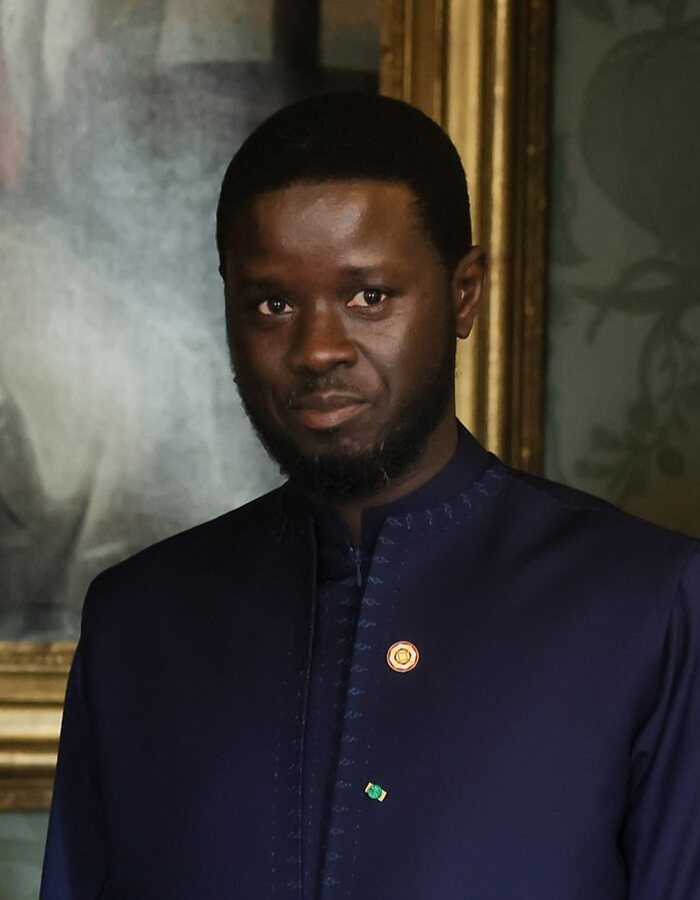 Bassirou Diomaye Faye
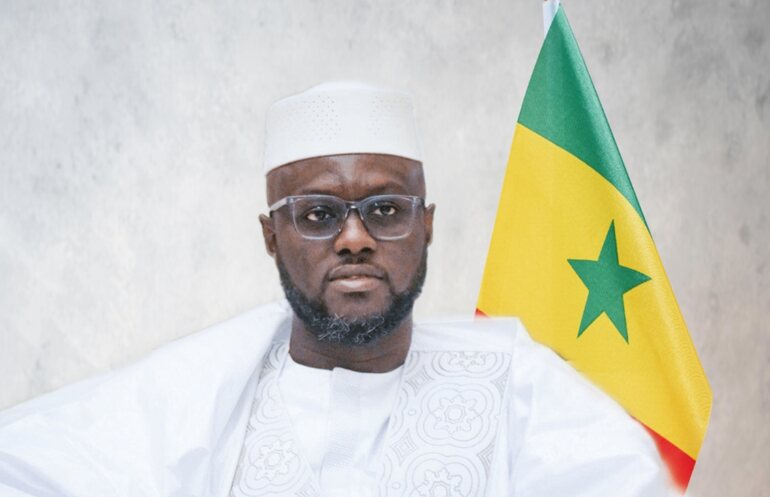 Ousmane Sonko
Bassirou Diomaye Faye was not, before 2024, destined to embody a historic rupture alone. His rise was directly linked to the impediment of Ousmane Sonko, whose candidacy had been rejected. Released from prison shortly before the election, the two men led a campaign in which their political identities seemed almost intertwined.
Faye finally won the presidency. But the political formula born from this victory included an unresolved question: when a president owes a decisive part of his accession to power to a party leader with his own political influence, where is the real center of decision?
Bassirou Diomaye Faye had very early insisted on his autonomy and on the fact that the presidency could not be exercised by proxy.
The difficulty was therefore not accidental. It was inscribed in the very birth of the new power.
As long as Faye and Sonko pursued the same strategy, this duality could be presented as a complementarity. The president embodied the State; his Prime Minister carried militant strength and the promise of rupture. But as soon as differences appeared on methods, institutions and, above all, economic policy, this complementarity turned into competition.
The disagreement became public. Sonko had already denounced in 2025 a “problem of authority”. In May 2026, Faye finally dismissed him as Prime Minister. Sonko then returned to the National Assembly, of which he became president, while Ahmadou Al Aminou Lo took over as head of government. A few weeks later, the president announced and then created his own political organization.
It is therefore no longer a tension at the top of the executive. Two political centers now face each other.
The unexpected test of the debt
This separation comes at a time when Senegal discovers that it has much less economic freedom than assumed in the transformation program presented to voters in 2024.
The coming to power of Faye and Sonko should make it possible to restore political and economic sovereignty: better control of natural resources, renegotiation of certain relationships with foreign partners, fight against corruption, job creation and more equitable redistribution of income from hydrocarbons.
But the audits of public accounts have profoundly modified the framework.
The new authorities revealed that the debt inherited from the previous administration had been significantly undervalued. For the year 2023 alone, an audit increased the debt from 74.41% to 99.67% of GDP. Subsequent evaluations further aggravated the finding. In June 2026, the IMF estimated total public sector debt at around 132% of GDP at the end of 2024.
The problem goes beyond accounting: when a State discovers that its real debt greatly exceeds that which appeared in its accounts, three constraints are imposed simultaneously. It must restore the confidence of creditors, restore the credibility of its public statistics and finance the social promises on which power was elected.
The debt thus gives the political rupture its most concrete expression.
The disagreement between Faye and Sonko particularly concerned the conduct of negotiations with the International Monetary Fund. The president and his former prime minister did not only differ on people or on the organization of power. They found themselves confronted with the central question of any sovereignty policy: what remains of freedom of decision when the State depends on an agreement with its donors and creditors to restore its financing capacity?
“Reprofile” without restructuring?
The vocabulary used by the Senegalese authorities deserves particular attention here.
The government says it wants to “reprofile” part of the debt rather than carry out a traditional restructuring. The principle consists in particular of extending certain deadlines and renegotiating financial conditions in order to reduce the immediate pressure on public finances.
On September 8, 2026, Prime Minister Ahmadou Al Aminou Lo indicated that the country must also clear around $3.5 billion in arrears. Senegal has, at the same time, concluded, at the service level, an agreement with the IMF covering a three-year program of approximately $2.2 billion.
This distinction between reprofiling and restructuring has obvious political significance.
Debt restructuring evokes failure, insolvency or, at least, the inability of a State to fully respect the commitments previously contracted. Reprofiling suggests, on the contrary, technical management of deadlines.
But the creditor does not necessarily think according to the same categories as the government.
From the beginning of September, several Senegalese bond holders formed a group and retained the White & Case firm to represent them. Amundi, Europe's leading asset manager, estimated a few days later that the valuation of Senegalese securities perhaps did not fully reflect the risk associated with future negotiations.
The conflict over words therefore announces a much more concrete conflict over the distribution of the costs of adjustment.
It remains to be determined who will bear the cost: foreign creditors, domestic holders of public debt, the state budget, taxpayers, consumers through reduced subsidies, beneficiaries of social programs or future public investments.
The answer to these questions will weigh more on the stability of Senegalese power than on many personal rivalries.
The hydrocarbon paradox
Senegal nevertheless has an asset that many highly indebted countries do not have: the entry into oil and gas production.
In 2025, real GDP growth reached 6.7%, driven in particular by hydrocarbons. The population was around 18.9 million and the GDP was around $37 billion.
At first glance, the contradiction seems strange: why is a country entering the oil era simultaneously experiencing a major debt crisis?
Growth driven by hydrocarbons does not immediately provide the budget with the resources necessary to absorb an already accumulated debt. In addition, the State only receives part of the income from exploitation. The anticipation of future revenues can even encourage new borrowing, since tomorrow's revenues serve as collateral for today's spending.
Senegal's challenge therefore consists of avoiding what one could call hypothecated sovereignty: having new resources while having already committed part of the financial capacity that they were to provide.
The challenge of Senegal consists of avoiding hypothecated sovereignty: having new resources while having already committed part of their financial capacity.
The renegotiation of mining contracts and the sharing of extractive rent between the State and the populations therefore take on decisive importance.
Two powers resulting from the same electoral revolution
The Faye-Sonko rupture does not reproduce the usual confrontation between the government and the former opposition: it shares the camp which won the 2024 alternation.
The opposition traditional tradition still exists, but the decisive political conflict could now be played out between two heirs of the 2024 alternation.
Faye has the executive instruments and international visibility of the head of state. Sonko retains a militant organization, Pastef, as well as considerable parliamentary weight. The President of the Republic must therefore govern with an Assembly whose political majority no longer belongs to him in the same way as the day after the legislative elections of 2024.
The attempt at constitutional reform in June 2026 provided a first spectacular manifestation of this. A reform supported by the parliamentary majority aimed to strengthen the powers of the Assembly and to further regulate those of the President. Bassirou Diomaye Faye referred the matter to the constitutional court, which ultimately dismissed the text.
The crisis Senegalese policy thus becomes an institutional experiment.
How does a regime when the president and the leader of the parliamentary majority come from the same historical movement, but no longer pursue the same strategy?
Senegal could be in the process of inventing, without having wanted to, a form of cohabitation within the former majority.
Local elections as a first verdict
Local elections expected in 2027 should provide the first serious indicator of the balance of power.
They will allow us to know whether the electorate which had brought about the break in 2024 recognizes itself primarily in Sonko, in Faye, in both, or already in neither of the two.
Simply setting the timetable has become contentious. Pastef insists on respecting electoral deadlines, while the opposition also refuses any postponement which would artificially prolong the local mandates in force.
The local vote will therefore take on a national scope.
A victory for Pastef would reinforce the idea that Sonko retains political ownership of the movement which led to the change.
Significant progress by Kiiraay would demonstrate, on the contrary, that Faye can transform the presidential legitimacy acquired in 2024 into an autonomous political force.
A significant return of the former opposition would finally reveal something more worrying for the two men: their confrontation would have begun to dissipate the political capital of the break.
Can we still save the 2024 project?
Reconciliation remains possible, but the future of the 2024 project cannot depend on this hypothesis alone.
The question is to know what, in their project common, can survive their separation.
The question is to know what, in their project common, can survive their separation.
Reduced to the refusal of old dependencies, sovereignty would remain incomplete: the debt reminds us that it requires financial, administrative and productive capacities. A rupture limited to the replacement of one elite by another would, for its part, be exhausted in the struggle for control of institutions. It will only retain its scope if it restores the transparency of public accounts, improves the negotiation of resources, strengthens counter-powers and sustainably transforms the relationship between those who govern and those who are governed. The conflict between Faye and Sonko thus forces everyone to specify what they intend to keep from the initial project.
The main Senegalese issue lies here: in 2024, two men had presented their complementarity as a response to the crisis of the political system; in 2026, their separation forces them to demonstrate that change did not depend solely on their alliance.
The country will then be able to judge whether the promised break was firmly enshrined in the institutions to survive the divorce of those who had it incarnate.