
Foreign Contractors on the Congolese Front Line
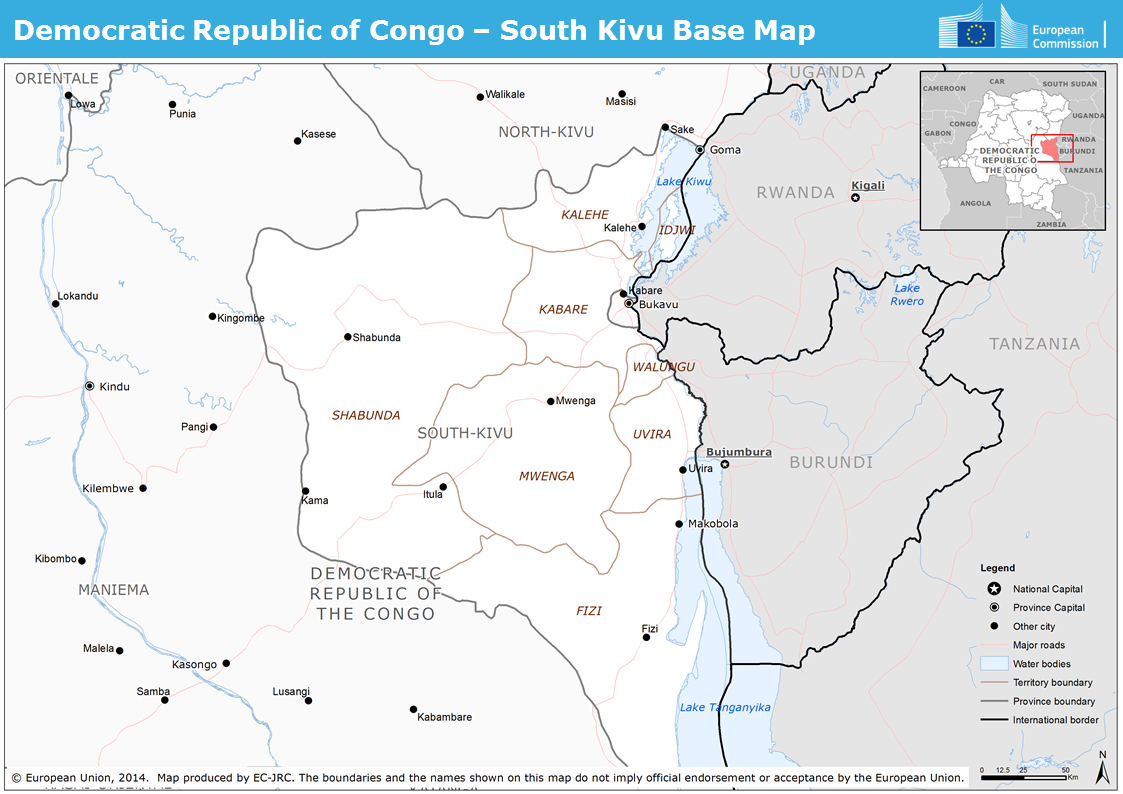
Foreign private security companies are now operating on the front line in eastern Democratic Republic of the Congo. According to a Reuters investigation published on 10 February 2026, men linked to the American entrepreneur Erik Prince, founder of Blackwater, were deployed alongside Congolese forces in the Uvira area of South Kivu. Their involvement reportedly included drone support for army units. Initially hired to help secure mining revenues, these contractors were later called in for military operations. Against this background, Reuters reported on 9 October that an ambush in mid-September had left at least twenty of Prince’s men, employed by Vectus Global, dead or wounded. AFP, for its part, documented the presence of foreign personnel in Kalemie and Kisangani, as well as training, piloting and maintenance activities. Beyond Prince’s networks, it reported personnel of various nationalities whose employers and mandates were not always known.
The situation is serious enough to rule out any approximation. Vectus Global and Quantum Global Consulting are named in investigations into Prince’s interests in the DRC. Israeli advisers were also reportedly present alongside Congolese special units, with a mandate described as limited to training.
The US State Department stated that it had no contract with Prince or his companies. The Congolese army, however, has confirmed that it has called upon foreign resources to operate on its own territory.
Zaire/DRC: A Security Giant with Feet of Clay?
Congo-Kinshasa has seen foreign interventions since independence in 1960. The first was the United Nations Operation in the Congo, launched in a country whose young army, inherited from the colonial Force Publique, had rapidly disintegrated. Secessions, political rivalries and foreign interference severely weakened it. Consequently, the military question has remained central to the survival of the state of Congo-Kinshasa/Zaire/DRC.
During Marshal Mobutu’s long rule, the army’s strength was repeatedly proclaimed, but its weakness became apparent whenever a major crisis arose, particularly in Shaba in 1977 and 1978, especially at Kolwezi in May 1978. The regime, which presented itself as the guarantor of national unity, repeatedly needed foreign soldiers to preserve its authority.
This contradiction did not disappear after Mobutu’s rule ended. The wars of 1996–1997 and from 1998 turned Congolese territory into a battlefield for regional armies and rebel movements. Successive governments had to accommodate military allies whose interests never fully aligned with the Congo's. MONUC, later MONUSCO, then assumed a lasting security role in the east.
Throughout this period, although the Congolese state was not entirely deprived of initiative, it did not regain sufficient military capacity to dispense with external interventions.
The Army of the Regime or the Army of the Nation?
That is the real question. Since Marshal Mobutu, the country’s leaders have focused on retaining control of the armed forces, at times encouraging personal loyalties, privileged units, and political balancing at the expense of a stable chain of command. The successive integration of former combatants, unfinished reorganisations, pay and supply shortages, and resource diversion have weakened the armed forces. The Congo-Kinshasa army is among the most poorly equipped, least adequately supplied, and least consistently trained armies in Africa, even as costly contracts are signed to acquire technical capabilities or pay mercenaries.
“To whom does the army owe its loyalty? To the head of state, the government in power, its commanders or the nation? The official answer is well known. The Congo’s military history shows how difficult it has been to translate that principle into an effective organisation of the armed forces.”
The Choices Made by Congolese Leaders
The responsibility of foreign powers, the Congo’s neighbours and armed groups in the tragedy of Congo-Kinshasa is established and must be identified whenever the facts justify doing so. However, this cannot exempt Congolese governments from examining their own inability to build a national army, despite the country’s immense financial resources and one of Africa's largest populations. Why has security spending failed to produce an army that is better trained, regularly paid, properly equipped and placed under accountable command? Why have successive announced reforms failed to end reliance on external forces?
The central problem remains creating a Congolese army with reliable resources, effective discipline, a unified chain of command, and accountability to civilian institutions. External arrangements may meet urgent needs; they become problematic when they let authorities postpone reforming their own institutions indefinitely.
“Defence of the border is a sovereign responsibility whose implementation may be assisted, but whose political responsibility cannot be delegated to external partners.”