
On 9 October 2026, Zambia reached a new financing agreement worth $1.5 billion with International Monetary Fund staff, subject to approval by the institution’s Executive Board. Yet the country has one of Africa’s largest copper industries. Its copper is used in electricity networks, industrial equipment and technologies whose supply the major powers seek to secure. Nevertheless, Zambia must still borrow to stabilise its public finances.
This paradox is nothing new. It has run through the country’s economic history since independence. Copper has long been the principal source of foreign currency, public revenue and investment. It has also exposed the state to fluctuations in world prices and foreign companies' decisions. When prices rise, exports increase, and investors earn additional income. When prices fall, public finances deteriorate, projects are postponed and the need to borrow returns.
From Kenneth Kaunda to Frederick Chiluba: the forced pace of copper privatisation under the pressure of debt
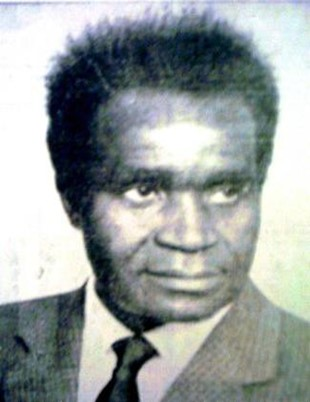
After independence, Kenneth Kaunda progressively brought the main mining companies under public control. The 1982 establishment of Zambia Consolidated Copper Mines (ZCCM) consolidated this approach. The state sought to control a resource on which most of the national economy depended.
Nationalisation had not eliminated the difficulties. Falling world prices, operating costs, ageing facilities, insufficient investment and management problems had weakened the mines. Dependence on copper remained complete. When revenue fell, the state had few other sectors to offset the losses.
In the early 1990s, Frederick Chiluba’s government embarked on a wide-ranging liberalisation programme. The state gradually put enterprises up for sale. International financial institutions then supported privatisation, fiscal discipline, and openness to private capital, presenting these policies as necessary for economic recovery. In ZCCM’s case, privatisation was no secondary reform.
The letter of intent sent to the IMF in March 1999 explicitly listed the sale of the main mining assets among the commitments of Zambia’s economic programme. Transfers involving Nchanga, Nkana, and the Konkola Deep project, in particular, had a specific deadline.
Recall that changing ownership of the copper mines was part of the formal commitments negotiated under an IMF-supported programme.
The Zambian authorities had adopted a privatisation policy themselves. But they negotiated in difficult financial circumstances, when continued international assistance and normalised relations with creditors depended on their economic commitments.
For investors, the Zambian mines were industrial assets in need of rehabilitation, requiring substantial capital. For the government, their sale was intended to revive production, reduce the burden on public finances and attract foreign investment. For international financial institutions, it was part of a broader economic reorganisation.
The transaction, however, involved much more than ownership of the facilities alone. It also set the conditions under which the state could later claim a share of the wealth produced.
Copper sold, taxation negotiated: what remains for the country?
The agreements concluded with investors during privatisation included substantial tax concessions. Some mining royalties were set at exceptionally low levels, around 0.6 per cent. Other provisions reduced profit taxes or protected companies against certain subsequent changes in tax legislation.
Those concessions were justified, according to their defenders, by the risks involved in taking over ageing facilities and by the investment required to revive production. Companies wanted sufficient predictability to commit their capital.
Zambia had transferred the operation of much of its mining patrimony to private investors while accepting restrictions on its ability to change public levies quickly. The consequences for the state, however, were considerable.
The IMF later acknowledged in its analyses that mining revenues remained particularly low in the early years after privatisation.
Between 2000 and 2007, government revenue directly from mining averaged less than 0.1 per cent of gross domestic product, although the sector contributed substantially more to economic activity.
This discrepancy reflected several factors: initially low copper prices, investment, tax credits and advantages granted to operators. Nevertheless, it exposed the limitations of a model in which a production recovery did not immediately bring a comparable increase in state revenue.
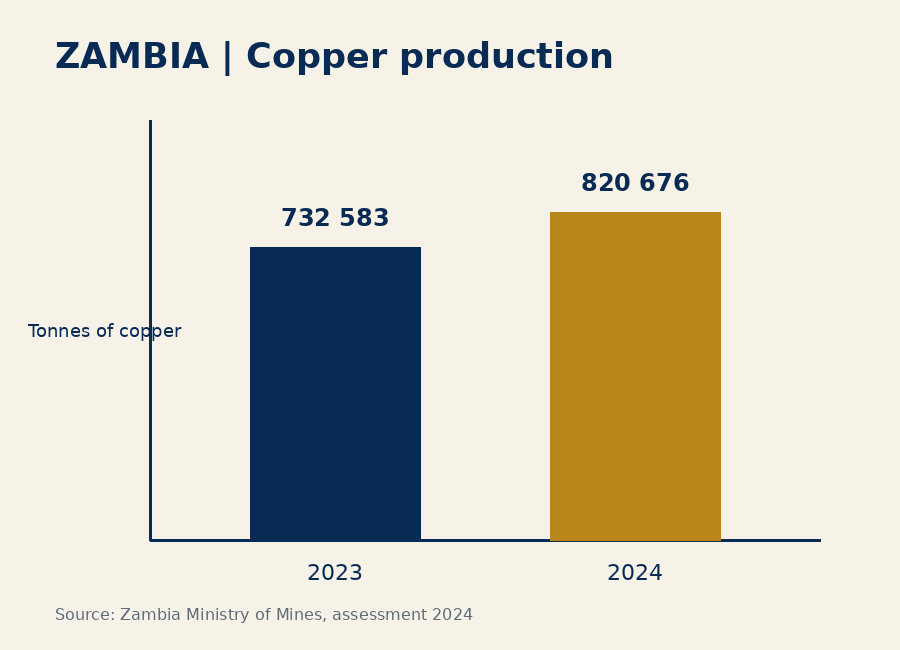
Production did indeed recover. From around 250,000 tonnes at the turn of the millennium, it rose to more than 750,000 tonnes in 2013.
Privatisation had therefore helped revive activity. In its early years, however, it had not ensured fiscal redistribution proportionate to that recovery.
Ownership thus became inseparable from budgetary sovereignty: what is the point of producing more copper if the rules governing public levies prevent the community from receiving a sufficient share?
The IMF itself acknowledged in subsequent analyses that mining revenues remained particularly low during the first years following privatisation.
Between 2000 and 2007, government revenue directly derived from mining averaged less than 0.1 per cent of gross domestic product, even though the sector made a substantially greater contribution to economic activity.
Several factors accounted for this discrepancy: initially low copper prices, investment expenditure, tax credits and concessions granted to operators. Nevertheless, it exposed the limits of a model in which production recovery did not immediately bring a comparable increase in government revenue.
Production did indeed recover. From approximately 250,000 tonnes around the turn of the millennium, it rose to more than 750,000 tonnes in 2013.
Privatisation had therefore helped revive activity. In its early years, however, it had not secured a proportionate fiscal return from that recovery.
The question of ownership thus became inseparable from fiscal sovereignty: what is the purpose of producing more copper if taxation rules prevent the community from receiving an adequate share?
The confrontation of 2008
The rise in world copper prices made the tax advantages granted during the crisis increasingly difficult to justify. Lusaka moved to increase mineral royalties, amend profit taxation, and introduce a windfall profits tax.
The mineral royalty rose, notably, from 0.6 to 3 per cent. Corporation tax increased from 25 to 30 per cent. In 2008, the Zambian government attempted to regain control.
These measures expressed a clear political intention: to enable the state to recover a greater share of the revenue generated by the exploitation of its mineral resources.
Mining companies challenged some of the provisions, invoking agreements previously concluded with the government. Fiscal stability clauses became a tool for resisting new state decisions.
The international financial crisis of 2008, followed by a fall in copper prices, further weakened the government’s position. In 2009, the windfall profits tax was abolished.
This episode illustrates a fundamental contradiction. Zambia had the power to legislate, but exercising that power ran into contractual commitments, investors’ strategies, and the constraints of the world market.
Successive Zambian governments have since amended the mining tax regime several times. Royalties have increased, and the system has become more responsive to copper price movements.
It would therefore be inaccurate to portray present-day Zambia as a state receiving virtually no revenue from its mines. Mining taxes now constitute a major source of national budget revenue.
Yet this development has not ended dependence. It has made it more complex. Formal sovereignty alone was not enough to guarantee economic control.
The IMF, Banker to an International Economic Order
The International Monetary Fund presents itself as a multilateral institution responsible for preserving financial and monetary stability. All its member states participate in its governance.
Voting rights are primarily linked to quotas. The United States holds about 16.5 per cent of the vote, enabling it to block certain fundamental decisions that require an 85 per cent majority. The other major industrialised economies also exercise considerable influence.
The IMF therefore does not belong exclusively to industrialised countries, but its governance reflects an international economic hierarchy in which those countries hold a dominant position.
An IMF programme seeks to restore macroeconomic stability, the state’s ability to meet its payments and creditors’ confidence. These objectives can benefit the borrowing country’s population: a currency crisis, uncontrolled inflation or the collapse of public finances also have serious social consequences.
But they also interest creditors, capital holders, and businesses that want to operate in a predictable economic environment.
Budgetary discipline can restore financial balance while reducing the resources available for certain public investments. Stable economic rules can encourage foreign capital while limiting a government’s ability to revise arrangements it considers unfavourable.
It would be mistaken to conclude that every IMF loan favours a particular foreign company. Zambia’s history nevertheless shows that Fund-supported programmes contributed to the reorganisation of a sector central to the country’s sovereignty.
This historical continuity must be examined as the institution returns to finance Zambia today.
Does Copper Repay the Debt?
Zambia defaulted on part of its sovereign debt in 2020. Negotiations since then have involved several categories of creditors: states, multilateral institutions, banks, and private bondholders.
China occupies an important position among bilateral creditors. France co-chaired the official creditors’ committee established as part of the restructuring with China. Their interests are not necessarily identical.
Mining investors and government creditors are not necessarily the same actors, either. Zambia’s major mining operations now involve Canadian, Chinese, Indian, Emirati, American and Zambian interests.
Mineral exports provide an essential share of the foreign currency the country needs. Taxes and levies on the sector support public finances. Production prospects and world prices therefore affect the state’s capacity to service its debt.
Some restructuring agreements with Eurobond holders allow, subject to conditions, payments to rise or accelerate when the country’s economic and financial circumstances improve.
This mechanism grants creditors no ownership rights over copper. It nevertheless means improved economic performance can trigger repayment obligations that are more favourable to them.
When copper prices rise, several potential beneficiaries emerge: mining companies, the state, creditors and, indirectly, the people who should benefit from public revenue.
The issue is how that revenue is shared. This diversity of interests makes it impossible to reduce Zambia’s debt to a confrontation between Africa and the West.
Growth in production does not automatically determine the share that will go to workers, public services or industrial investment.
Nor does an increase in tax revenue guarantee that it will be directed primarily towards social needs. Successive Zambian governments bear responsibility for their budgetary decisions.
External financial dependence and domestic political choices are part of the same problem, though not identical. The copper economy and debt repayment nevertheless remain closely connected.
The Copperbelt and the Redistribution of Mining Revenue
The history of copper cannot be told solely through the accounts of companies and financial institutions.
In the Copperbelt, mines long shaped economic and social life. The public enterprise did more than produce metal. It contributed to workers’ housing, medical services, education and the maintenance of certain communal facilities.
This model entailed high costs and management shortcomings. Nevertheless, it had made the mining company a social institution.
The state took over some services, while others were privatised or discontinued. Redundancies and reorganisations affected workers and their families. Mining towns had to bear some of the consequences of industrial restructuring.
New investment modernised mining operations and increased production. Yet a capital-intensive industry's performance cannot be measured solely by the number of jobs it creates.
The extractive sector accounts for a considerable share of Zambia’s exports and public revenue, while directly employing a relatively small proportion of the workforce.
It nevertheless raises a development question: how can a highly profitable productive activity that creates relatively few direct jobs become a range of industrial, commercial, and social activities that benefit a wider population?
This requires infrastructure, technical expertise, processing industries, an energy policy, local businesses and institutions capable of negotiating and monitoring contracts.
Zambia already has copper smelting and refining facilities. It is not starting from nothing. But these facilities do not mean the entire value chain is under national control.
The debate concerns control over the most profitable activities and the capacity to use mining revenue to diversify the economy on a lasting basis. Privatisation transformed this arrangement.
The Environmental Damage Caused by Mining
In February 2025, a tailings storage facility operated by Sino Metals Leach Zambia near Chambishi failed, causing acidic effluent to spill into waterways connected to the Kafue River.
The accident caused ecological damage, losses to some agricultural activities, and disrupted water supplies.
The operator and the national authorities’ supervisory obligations bear immediate responsibility for this incident. It cannot be presented as a direct consequence of an IMF programme. This contrast is not peculiar to Zambia; it characterises many modern mining economies.
It nevertheless reveals a fundamental feature of the extractive economy: the benefits and costs of mining are not necessarily borne by the same actors.
A company may earn revenue from production. The state may collect taxes. Foreign consumers may benefit from the extracted metal. Local residents, meanwhile, may suffer pollution, land degradation, or interrupted access to water.
Economic sovereignty also entails the capacity to prevent such damage, sanction breaches and secure redress. The response cannot be confined to extraction.
Voluntary corporate social responsibility commitments do not replace public regulation or justice.
The 2026 Financing Agreement in the History of Dependence
Zambia seeks to substantially increase its copper production. Major industrial powers are showing growing interest in the minerals needed for their electrical, energy, and technological equipment.
The timing of these negotiations does not establish that the IMF is making its financing conditional on awarding mining concessions to American companies. Nothing presented here demonstrates such a condition in the new agreement. People living in mining regions also bear environmental risks.
It would nevertheless be naive to study lending policy, investors’ strategies and international competition for resources in isolation.
Industrialised states seek to secure their supplies. Companies seek favourable investment conditions. Creditors want to preserve debtor countries’ capacity to repay. African governments seek capital, tax revenue and financial support.
These interests may converge around the same strategic sector, even without a common agreement.
Zambia’s copper helps supply foreign industries, sustain public revenue, and shape its prospects for repaying debt. Yet the country’s capacity to turn this wealth into economic autonomy remains constrained by its production structure, financial commitments and government decisions.
It must also be acknowledged that the IMF has not stood still in its approach. Its more recent programmes place greater emphasis on protecting social expenditure, mobilising tax revenue and ensuring debt sustainability. The institution itself recognises the need to secure greater value from mineral resources.
The question is one of results.
More than a quarter of a century after privatisation, Zambia remains dependent on copper and international financing. Production recovery has not been enough to shield it from debt crises.
Responsibility lies in a complex history of unequal contracts, market fluctuations, investor strategies, adjustment policies, domestic budgetary decisions and inadequate industrial diversification.
One constant nevertheless emerges: successive transformations of the mining sector have seldom enabled the Zambian state to exercise lasting control over the conditions of its development. The new agreement announced on 9 October 2026 comes at a particular moment.
Sovereignty Tested by Wealth
The problem is not that Zambia borrows. No modern state develops without resorting to credit at certain points.
Rather, the country repeatedly appears to need loans to stabilise an economy whose principal source of wealth is sought after by the powers dominating international finance, investment, and trade. At the same time, Lusaka is discussing a critical minerals agreement with Washington.
The IMF does not physically siphon off copper. Companies extract it, traders sell it, and creditors receive the repayments stipulated in their contracts.
But the Fund has historically supported transformations that helped transfer ownership of many mines to private investors. It now intervenes in an economy whose mineral resources continue to sustain public revenue, external payments and returns on international capital.
In this sense, the title of this article acquires its political significance.
Any such siphoning is not a single operation conducted by a single institution. It describes an economic arrangement in which a substantial share of the value created by a national resource may be transferred abroad, while the state remains exposed to debt and the need to seek further financing.
The existence, scale, and legitimacy of these transfers must be established through contracts, company accounts, and public statistics. Not all repatriated profits are unlawful, and repayment of a debt that has been incurred does not in itself constitute dispossession.
The political question lies elsewhere: who decides how the wealth produced is used? Zambia stands at the centre of this arrangement.
Until Zambia can sustainably convert its mining revenue into industrial capacity, infrastructure, public services and financial autonomy, each new loan will recall the limitations of the economic model built around its copper.
The country does not merely need to extract more. It needs greater power to decide what becomes of the wealth extracted from beneath its soil.