
South Africa · Municipal elections · Analysis
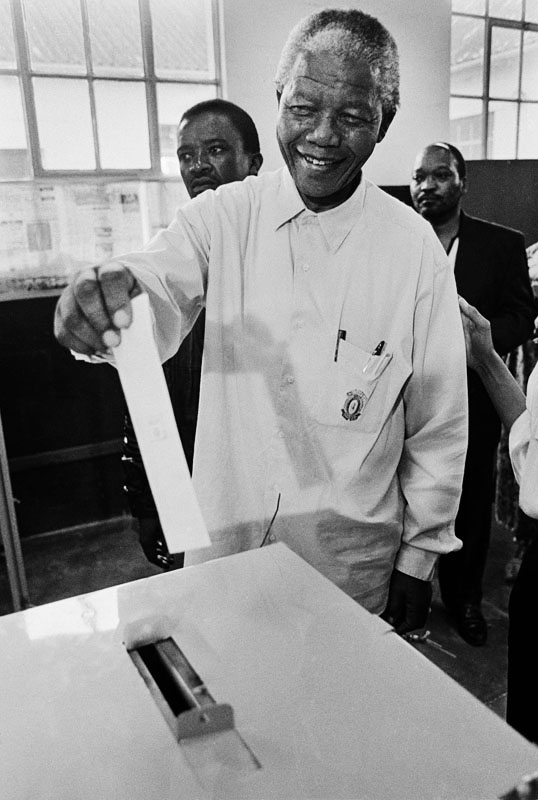
ANC: is Mandela’s memory being consigned to the museum?
In the 4 November municipal elections, the ANC falls to around 31% in near-complete results. Water shortages, failing networks and municipal rivalries now carry more electoral weight than the prestige of the liberation party.

8 November 2026 · Provisional results; counting progress specified in the sources.
The liberation party reduced to a third of the vote
With 99% of votes counted, the African National Congress has around 31%, against 25% for the Democratic Alliance and close to 10% for Jacob Zuma’s uMkhonto weSizwe. Reuters published these figures on 8 November ahead of the expected final results. In Johannesburg, its tally puts the DA at around 35% and the ANC at about 20%. These shares do not yet determine who will become mayor: alliances remain to be negotiated. 1
The decline continues an existing trend. In the 2021 municipal elections, the ANC obtained 45.59% in the Electoral Commission’s combined ward and proportional-representation totals. In 2024, it lost its absolute majority in the national elections, with just over 40% on the national ballot. The polls are not directly comparable, but successive setbacks show that electoral loyalty can no longer be taken for granted. 2–3
Dry taps and voters demanding accountability
The Guardian’s election-day report describes voters facing water outages, power cuts and deteriorating infrastructure. Johannesburg residents interviewed also blamed instability in municipal administrations.4
Outages force people to fetch water, incur costs and disrupt work. Their price is measured in household income and in the time spent each day compensating for failing services.
The means to protect oneself are unequally distributed. The Financial Times reports households buying water tanks or solar equipment while others remain dependent on degraded services. Private provision can compensate for a breakdown for those who can afford it; it leaves the common network’s problems unresolved. 5
The recognition owed to a liberation movement does not constitute an electoral mandate that can be inherited indefinitely.
Votes fragment, and so does responsibility
The ANC’s retreat does not automatically give another party a stable majority. Aggregated national results conceal different municipal balances. Each council has its own composition and coalition options; South Africans are not electing one government for all their cities.
MK’s place among the leading parties also shows that discontent benefits more than one opponent. Jacob Zuma himself led both the ANC and the country. Part of the competition is between parties whose leaders invoke political legacies rooted in the same history. These results do not identify individual voter transfers.
Coalitions can force parties to negotiate and scrutinise their partners. They can also multiply changes of administration and blur responsibility. When several parties successively join a majority, each can blame failures on the others. Electoral competition becomes less effective if citizens cannot identify who decided, spent or prevented a repair.

Building majorities, restoring services
The agreements will be judged by their ability to last and deliver government. Repairing a pipe, planning works or collecting revenue requires continuity beyond an officeholder’s survival for a few weeks. Appointment rules, staff competence and spending oversight matter as much as the party taking the mayoralty.
The ANC can no longer avoid the tension between historical loyalty and contemporary judgment. Its secretary-general, Fikile Mbalula, acknowledged the severity of the setback and the need to put the party in order, Reuters reported. That acknowledgement does not establish what changes will follow. 1
The ANC remains a coalition force
The result does not announce the ANC’s disappearance. It remains a central force able to negotiate coalitions and regain support. Assess its renewal through decisions and results, without treating a major setback as a predetermined end.
Sources and status of results
- Nellie Peyton, Reuters, “South Africa’s ANC battered by local election losses ahead of coalition talks”, 8 November 2026. Data with 99% counted; final results expected later. The 8 November update follows the 4 November poll.
- Electoral Commission of South Africa, 2021 municipal elections report, national summary table. The 45.59% figure combines ward and proportional-representation ballots; including other ballots produces a different measure.
- European Union, Election Expert Mission, report on the 2024 elections. ANC result of 40.18% on the national ballot; a different election from the municipal polls.
- The Guardian, report on public services and municipal elections, 4 November 2026. The interviews are not a representative survey of all voters.
- Financial Times, “Dry taps, sewage spills, power cuts and bad roads haunt South Africa’s ANC”, 31 October 2026, context immediately preceding the week covered.