
Digital tools as a means of acquiring scientific inquiry: the case of numerical simulation in teaching and learning the concept of “equilibrium for a solid body with a fixed axis” in a senior high school science class (10th grade).
Publication date :
Abstract
This study examines the impact of using numerical simulation on students' acquisition of an authentic scientific approach to solving physics problems. Ninety-five (95) students first took a paper-based pre-test designed to collect their initial conceptions of this methodology. The class was then divided into two groups: an experimental group, which received instruction through the Nature of Science (NoS) using a numerical simulation combined with a 3D simulator, and a control group, which received instruction without the numerical simulation. The results show that, on average, twenty-five (25) out of thirty-one (31) learners in the experimental group correctly applied all steps and aspects of the scientific approach and found a relevant solution to the problem, compared with none of the forty-five (45) learners in the control group. These results show that, compared with teaching and learning without numerical simulation, using these tools appropriately significantly improves learners' conceptualisation.
1. Introduction
As science and technology become increasingly important in our lives, developing scientific and technological skills has become a key challenge for the future of our societies [1]. This implies acquiring scientific literacy, which emphasises using scientific knowledge functionally across a wide range of contexts, as well as the means to stimulate thinking and understanding [2]. The Nature of Science (NoS), an essential component of scientific literacy, is characterised by a number of dispositions, namely: an awareness of the evolving nature of scientific knowledge, a sense of observation, objectivity of reasoning, a collaborative spirit, the development of critical thinking and, above all, the use of the scientific investigative approach in problem solving [3]. It is within this context of recent African curricular reforms, notably in Cameroon with the Competency-Based Approach (CBA) introduced from 2014/2015, that the physics curriculum for the senior high school science class (10th grade), which is the focus of our study, prescribes “Offer secondary school pupils the opportunity to develop their scientific culture and skills in an environment where they will increasingly be called upon to make choices in situations they will encounter or which will have an impact on their environment”. [4]
However, field experience shows that teachers do not implement the scientific investigative approach in the teaching-learning process or in assessing learners' performance, despite its explicit definition in curriculum tasks. A study carried out in Morocco [1] on the learning difficulties of physical sciences among secondary school pupils shows that only 47% of teachers report using the scenario-based problem-solving approach, and that 63% no longer follow the scientific investigative approach to build physics concepts with learners. Surveys carried out [5] in French secondary schools have already shown that learners encounter serious difficulties when placed in situations requiring scientific investigation. The essentially deductivist approach to teaching and learning physical sciences seems largely responsible for this situation. To this end, the author proposes a didactic approach closer to the scientific investigative approach, where experimentation is no longer the main concern but rather the "demonstration of laws" [5]. However, the implementation difficulties mentioned below lie in the ability to provide learners with an adequate experimental framework that allows them to manipulate the different variables of the phenomena involved in the teaching-learning process. This is due, on the one hand, to a significant lack of laboratory equipment, but, above all, to the fact that certain phenomena in the physical sciences are abstract [6]. According to [7], using numerical simulation as an experimental tool in physics is more appropriate because "simulation makes an abstract phenomenon concrete, and to understand a phenomenon from a scientific point of view is to be able to model it (to conceptualise it)". In the same vein, the survey conducted by [6] with 552 pupils reveals that numerical simulation is perceived as a tool facilitating real-time visualisation (86%), manipulation of variables and concepts (75%), formulation and testing of hypotheses (63%), interpretation of phenomena (66%), and investigation (53%).
Based on these results, [8] examined the possibility of transposing the scientific investigative approach at the secondary level using digital tools. He hypothesised that using digital tools such as computers, calculators, tablets, or smartphones would be more interesting, more motivating, and easier for pupils, and therefore more conducive to the scientific investigative approach. To this end, during the experimental phase, he divided one of his secondary school classes, comprising twenty pupils, into two groups of ten. The first group of ten pupils carried out the learning activity based on a problem scenario using red cabbage juice, following the scientific investigative approach on a computer and calculator, while the second group of ten pupils carried out the same activity following the scientific investigative approach on paper. During this experimental phase, the method adopted was observation of the pupils in both groups during the learning activity under the conditions set out above. In addition, he distributed a questionnaire to both groups at the end of the activity, which allowed him to validate or invalidate his initial hypothesis. He concludes that using digital technology reinforces interest and motivation and encourages scientific investigation. However, according to [9], the procedural dimension of the scientific investigative approach is often taught satisfactorily, and its mastery is assessed, but the epistemic aspects of this process, relating to the understanding of certain specificities of scientific knowledge - such as "distinguishing scientific facts from beliefs, in order to engage in a scientific relationship with natural or technical phenomena, and the living world" - are barely taught. Training programmes and learning assessments regularly emphasise the procedural aspects of the scientific investigative approach, to the detriment of its epistemic dimension, which is nevertheless very important in our current societies. This raises the following question: How does using numerical simulation in teaching/learning enable the acquisition of an authentic scientific investigative approach that integrates the foundations of the Nature of Science (NoS)?
2. Conceptual framework
According to [10], the scientific approach is a rigorous procedure, grounded in neutrality, doubt, consideration of failure, and validation through experience, that applies to all sciences. Depending on the nature of the knowledge being constructed, it can be inductive (from facts to laws), deductive (from laws to facts), or hypothetico-deductive, and it is articulated around the OHERIC method (Observation, Hypothesis, Experimentation, Results, Interpretation, Conclusion) in a not always linear manner. This non-linearity reflects the cross-cutting dimension that encompasses the cognitive, epistemological, social, and historical aspects of scientific activity [11].
Recent work by [12] developed a comprehensive five-stage approach (Orientation, Conceptualisation, Investigation, Conclusion, Discussion), operationalised into nine components and offering three possible pathways (inductive, deductive, or mixed), with the discussion stage applicable at all levels to facilitate metacognition. The distinctive feature of our instructional design is its reliance on the stages inherent to the scientific approach (Questioning → Hypothesis Generation → Experimentation → Interpretation → Conclusion), while integrating the cross-cutting dimension adapted to the very nature of physics concepts. Other research, such as [13], demonstrates that digital simulations, when appropriately guided, facilitate the exploration of abstract phenomena that are sometimes beyond learners' reach, enable the identification of links between the physical quantities of a phenomenon, the establishment of corresponding equations, the replication of experiments, and the collection of "clean" data that promote conceptualisation—hence the value of combining virtual and physical laboratories. D'Ham et al. [14], building on the central role of writing in science [15], transposed the experimental approach into seven tasks, three of which sit at the interface between theory and reality. By translating this authentic scientific activity into digital tools, they designed tools for production, collaboration, and monitoring integrated within LabNbook. This work shows that a digital environment grounded in explicit epistemological foundations, even if only partially integrated, supports the development of an authentic scientific approach.
The Nature of Science (NoS) constitutes the cognitive, epistemological, social, and historical foundation of scientific activity and is essential to science education, particularly through characteristics such as the distinction between theories and laws, creativity, subjectivity, the tentative nature of knowledge, and social dimensions [3, 16]. For this reason, several studies have emphasised that NoS learning is more effective when embedded in authentic scientific practices than through decontextualised, explicit instruction [17], and have identified the most relevant characteristics to consider in the transposition process [18]. Our instructional design adopts this contextualised approach by teaching NoS through the scientific approach itself—that is, during teaching and learning in an integrated and explicit manner. Thus, NoS is not taught as a separate content but is experienced by the learner in the posture of a researcher and knowledge producer.
In this research, we aim to operationalise these theoretical frameworks by combining a teaching approach, grounded in NoS, with relevant digital tools (PhET simulation for exploration, 3D simulator for interpretation), while allowing room for hybridisation. The central hypothesis is that this combination enables learners to acquire an authentic scientific approach in all its dimensions (procedural, cognitive, and epistemological), leading to a thorough conceptualisation of the phenomenon under study, as articulated by [13], which provides "clean" data that facilitate conceptualisation, while enabling autonomous investigation with appropriate learner guidance through the key stages [12, 14].
3. Methodology
In this study, data were collected in three stages: a pre-test and a post-test, using the same paper-and-pencil questionnaire, and a video recording during the experimental session. Subsequently, an analysis grid was designed to analyse the learners' productions from the pre-tests and post-tests.
3.1. Experimental Data Collection Method
Ninety-five (95) learners from the senior high school science class (10th grade) at Ngoa-Ekellé Bilingual High School participated in the pre-test, which lasted thirty (30) minutes. The class teacher administered the pre-test one week before teaching the concept of "equilibrium of a solid body about a fixed axis". Its objective was not only to gather learners' initial conceptions of equilibrium, but also to assess their use of an authentic scientific approach to solving a physics problem situation, as required by the curriculum for the scientific second-year class. Immediately after this paper-and-pencil pre-test, we divided the class into two groups using systematic sampling with a step of one pupil (using the class register): an experimental group (EG) and a control group (CG). The experiment took place one week after the pre-test. It consisted of teaching the EG in the computer room and the CG in their usual classroom, concurrently and within the prescribed time for this content (2 hours).
Each group initially had 45 pupils, but only 31 pupils ultimately participated in the experimental group, compared with 45 pupils in the control group. This discrepancy resulted from a slight delay at the start of the experiment in the EG, which prevented some learners from completing it. The class teacher taught the control group without digital tools, while the researcher taught the experimental group in the computer room using an interactive PhET numerical simulation [19] and a 3D simulator. This choice of two different instructors is justified, on the one hand, by the need for the two teaching sessions to take place simultaneously and, on the other hand, because in the EG, the teacher's activity was limited to a few instructions in accordance with the problematisation inductors of the Nature of Science (NoS) [12], with the pupils working more autonomously. The experiment took place in the computer room of Ngoa-Ekelle Bilingual High School, which has approximately fifty computers. We installed an interactive PhET numerical simulation software [12] and a 3D simulator on these computers. We then set up a projector to display the 3D ("Vision3D") images from our laptop.
The teaching-learning sequence for the experimental group was transposed following the scientific approach, integrating the different dimensions of the nature of science [12], and was divided into three phases:
i. The introductory phase consisted first of presenting the targeted competence and checking the learners' prerequisites in relation to the concept of equilibrium. Next, we presented the problem situation and ensured the learners appropriated it. Finally, we allowed the learners to formulate their hypotheses based on the problem each identified. During this phase, we used only the projector to display some images and videos related to the concept of equilibrium. The activity lasted 30 minutes.
ii. The development phase consisted of experimentation, presentation, analysis and interpretation of the results. Each pair of pupils implemented the experimental protocol using a PhET numerical simulation already installed on each computer. Data collection was immediately followed by presentation to the whole class, then by analysis and interpretation. During this stage, we used the 3D simulator to facilitate the learners' interpretations, particularly regarding the modelling of the equilibrium phenomenon. The activity lasted 60 minutes.
iii. The concluding phase concerned institutionalisation, formative assessment and the transfer of competence to a new problem situation, which we considered as homework. Institutionalisation involved formalising knowledge, particularly the concept of moment, the theorem of moments, and the equilibrium condition. We conducted a formative assessment to verify achievement of the specific objectives. We concluded with a similar problem situation to be solved using the same tools. The activity lasted 30 minutes.
Two weeks after the teaching, we administered a post-test featuring a problem scenario on the equilibrium of an object in motion about an axis, the same scenario presented to both groups during the pre-test. This post-test aimed to verify learners' progress in acquiring the scientific approach in all its dimensions (procedural, cognitive, and epistemological). On the day of the experiment, five learners were absent, so only ninety (90) learners took part in the post-test. The post-test lasted 60 minutes.
3.2. Test Questionnaire and Pupils' Production Analysis Grid
This grid will be used to analyse the pupils' productions on the following problem scenario.
3.2.1. Pre-test and Post-test Questionnaire
Alida and her mother are playing in an amusement park. Alida is surprised to have managed to keep her mother balanced on a horizontal bar, even though her mother weighs twice as much. Alida thinks the bar should not be in horizontal equilibrium (see Figure 1).
Two pupils (Ayissi and Ottou) have opposing statements about the equilibrium. For Ottou, there is equilibrium, while Ayissi claims the opposite.
Using your knowledge of the concept of equilibrium [...] and using the scientific approach, decide between the two friends.
Figure 1. Diagram of the seesaw with Alida and her mother.
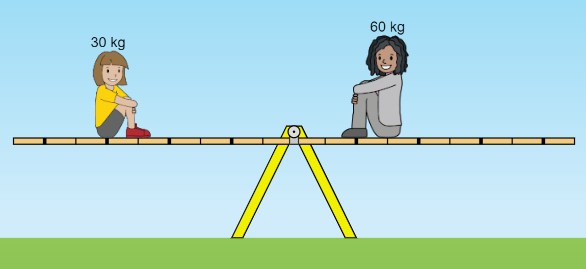
Source: The image was captured from PhET Interactive Simulations, University of Colorado Boulder, https://phet.colorado.edu. [19]
3.2.2. Learners' Production Analysis Grid
We evaluated each aspect of the scientific investigative approach in the learners' productions using the grid indicators. We conducted a mixed-method analysis of the productions: we coded the data, grouped them by activity, and then manually categorised responses using the indicators in Table 1. The frequency tables presented in the results section are derived from this analysis.
Table 1. Analysis grid of students’ work
| Foundations | Evaluation Criteria |
|---|---|
| Observation and Description | Does the learner explicitly identify key aspects of the phenomenon presented? |
| Observation and Description | Does the learner formulate a problem or a question? |
| Observation and Description | Is the problem formulated anchored in recognised theoretical fields? |
| Hypothesis Formulation | Does the learner propose hypotheses based on prior knowledge and observations? |
| Hypothesis Formulation | Has a hypothesis been formulated? |
| Hypothesis Formulation | Does the hypothesis establish a relationship between the two variables of the problem? |
| Hypothesis Formulation | Are the formulated hypotheses logical and plausible given the observations made? |
| Experimentation and Results | Does the learner design an appropriate experiment to test their hypotheses? |
| Experimentation and Results | Does the learner provide an experimental protocol? |
| Experimentation and Results | Does the learner use data collection instruments (mathematical relationships) to verify their hypotheses? |
| Experimentation and Results | Are the instruments used relevant? |
| Experimentation and Results | Does the learner collect relevant and reliable data during experimentation or observation? |
| Analysis, Data Interpretation, and Conclusion | Does the learner analyse the collected data in depth? |
| Analysis, Data Interpretation, and Conclusion | Do they relate the results to the formulated hypotheses? |
| Analysis, Data Interpretation, and Conclusion | Do they formulate scientific arguments based on evidence? |
| Analysis, Data Interpretation, and Conclusion | Do they connect the three elements of the scientific argument: the idea (hypothesis, theory, or law), the generated expectations, and the actual observations? |
| Analysis, Data Interpretation, and Conclusion | Does the learner draw conclusions based on the experimental results and compare them to their initial hypotheses? |
4. Results and Discussion
4.1. Pre-test
Table 2. Results of the analysis of productions on observation and description (Pre-test)
| Observation and Description | Observation and Description |
|---|---|
| Indicator | Frequency of Correct Answers |
| Does the learner explicitly identify key aspects of the phenomenon presented? | 51 out of 95 |
| Does the learner explicitly formulate the problem or question? | None |
| Is the formulated problem grounded in recognised theoretical fields? | None |
Table 2 shows that fifty-one (51) out of ninety-five (95) pupils stated that the seesaw would not remain in equilibrium. This statement indicates that the learner has an explicit representation of the phenomenon resulting from the scenario presented to them. However, none of the pupils clearly presented the scientific problem posed. Their problem formulation is superficial and implicit and does not account for the key variables of the scientific problem. Furthermore, six (6) of the fifty-one (51) pupils did not justify their choice, which may reflect the complexity of the situation for them. This result shows the limits of the pupils' observation and relevant description of the situation, due to what [20] called "primary observation". This also explains the difference between our results and those of [5], who opted for practical experimentation.
Table 3. Results of the analysis of productions on hypothesis formulation (Pre-test)
| Hypothesis Formulation | Hypothesis Formulation |
|---|---|
| Indicator | Frequency of Correct Answers |
| Does the learner propose hypotheses based on prior knowledge and observations? | 16 out of 95 |
| Has a hypothesis been formulated? | 16 out of 95 |
| Does the hypothesis establish a relationship between the two variables of the problem? | 16 out of 95 |
| Are the formulated hypotheses logical and plausible given the observations made? | 16 out of 95 |
Table 3 shows that only sixteen (16) learners out of ninety-five (95) formulated a scientifically elaborated hypothesis for the scenario. The other learners formulated hypotheses that were not based on observations, but on dogmatic knowledge anchored in certainties (preferences, prejudices, preconceived ideas, etc.). Consequently, they could not link the two key variables of the situation to formulate a proposed answer to the problem. Twenty-one (21) pupils out of ninety-five (95) provided an incorrect justification of the situation. In contrast, seventy-two (58) pupils out of ninety-five (95) provided no explanation for the situation. This corroborates the fact that the learners were not able to identify variables in the observed phenomenon that could serve to make a prediction [20]. This also indicates a lack of knowledge of how to construct a hypothesis that directly links the variables in question. In this case, it might be useful to propose specific activities that help learners practise formulating hypotheses. This aligns with recommendations from several researchers on learners' understanding of the Nature of Science (NoS), which they consider essential for effectively acquiring scientific concepts [3]. It is therefore important to present the phenomenon in a way that facilitates not only identifying its variables, but also enabling learners to make predictions for experimentation. According to [3], this makes it possible to distinguish a hypothesis from a fact.
Table 4. Results of the analysis of productions on experimentation and results (Pre-test)
| Experimentation and Results | Experimentation and Results |
|---|---|
| Indicator | Frequency of Correct Answers |
| Does the learner design an appropriate experiment to test their hypotheses? | None |
| Does the learner provide an experimental protocol? | None |
| Does the learner use data collection instruments (mathematical relationships) to verify their hypotheses? | 12 out of 95 |
| Are the instruments used relevant? | None |
| Does the learner collect relevant and reliable data during experimentation or observation? | None |
Table 4 shows that the pupils made no reference to an experiment and, consequently, produced no experimental protocol. The learner perceives the hypothesis as a fact. Therefore, the learner does not see the need to produce a protocol to test the hypothesis, except to confirm the facts [5]. The learner performs neither experimental manipulation nor data collection, which distances them from the skills associated with this aspect of the scientific investigative approach. Nevertheless, twelve (12) pupils out of ninety-five (95) limited themselves to the use of mathematical instruments, which were not relevant for establishing "proof"[3].
Table 5. Results of the analysis of productions on analysis, data interpretation and conclusion (Pre-test)
| Analysis, Data Interpretation, and Conclusion | Analysis, Data Interpretation, and Conclusion |
|---|---|
| Indicator | Frequency of Correct Answers |
| Does the learner analyze the collected data in depth? | None |
| Do they relate the results back to the formulated hypotheses? | None |
| Do they formulate scientific arguments based on evidence? | None |
| Do they connect the three elements of the scientific argument: the idea (hypothesis, theory, or law), the generated expectations, and the actual observations? | None |
| Does the learner draw conclusions based on the experimental results and compare them to their initial hypotheses? | None |
Table 5 shows that all pupils' productions lack aspects related to data analysis and interpretation. The pupils did not provide any in-depth analysis of the collected data. No reference is made to the initially formulated hypothesis, let alone any scientific arguments advanced. The study draws no conclusion from the data interpretation. This reflects the effects of overuse of the inductive scientific investigative approach, which suggests that scientific knowledge is immutable [5].
4.2. Post-test
Table 6. Results of the analysis of productions on observation and description (Post-test)
| Observation and Description | Observation and Description | Observation and Description |
|---|---|---|
| Indicator | Frequency of Correct Answers | Frequency of Correct Answers |
| Indicator | CG | EG |
| Does the learner explicitly identify key aspects of the phenomenon presented? | 37 sur 45 | 29 sur 31 |
| Does the learner explicitly formulate the problem or question? | Aucune | 29 sur 31 |
| Is the formulated problem grounded in recognised theoretical fields? | Aucune | 29 sur 31 |
CG = Control Group; EG = Experimental Group
Table 6 shows that numerical simulation made the situation explicit for the learner, allowing them to construct the relevant parameters likely to favour understanding of the situation. According to [7], modelling is a construction intended to bring out the relevant parameters of the phenomenon presented to the learner. Simulation thus reduces obstacles related to the picturesque aspect of the phenomenon, which can hinder the acquisition of scientific knowledge. It is therefore easier for the learner to identify the greatest number of parameters or variables of the phenomenon studied [6]. It also allows the learner to ask relevant questions, formulate an adequate problem statement, and better conceptualise their reasoning in relation to the phenomenon studied. For example, becoming aware of the influence of distance, in addition to the already acquired concept of weight, when formulating the scientific problem highlighted by the situation. In summary, numerical simulation helps learners formulate a scientific problem when they are confronted with a problem situation.
Table 7. Results of the analysis of productions on hypothesis formulation (Post-test)
| Hypothesis Formulation | Hypothesis Formulation | Hypothesis Formulation |
|---|---|---|
| Indicator | Frequency of Correct Answers | Frequency of Correct Answers |
| Indicator | CG | EG |
| Does the learner propose hypotheses based on prior knowledge and observations? | 20 out of 45 | 29 out of 31 |
| Has a hypothesis been formulated? | 20 out of 45 | 29 out of 31 |
| Does the hypothesis establish a relationship between the two variables of the problem? | 20 out of 45 | 29 out of 31 |
| Are the formulated hypotheses logical and plausible given the observations made? | 20 out of 45 | 29 out of 31 |
CG = Control Group; EG = Experimental Group
Table 7 shows that twenty-nine (29) out of thirty-one (31) pupils formulated the hypothesis correctly. This indicates that once the learner has identified the scientific problem — conceived here as a gap between what is and what should be — it becomes not only easy but imperative for the learner to formulate a proposed answer by establishing a relationship between two variables of their choice in the scenario, thus formulating a hypothesis. This result is significantly better than that of [5], who used practical experimentation in which not a single learner out of twenty-nine (29) formulated a correct hypothesis. The simulation also enabled learners to identify multiple variables in the phenomenon and understand the need to formulate a hypothesis, its provisional character, and even the possibility of invalidating it after experimental verification [3]. Thus, contrary to [6], experimentation is mentioned here as a means of verification and not only as a means of confirming the hypothesis. This is why, if the learner formulates the hypothesis that equilibrium also depends on distance, they simultaneously understand that this may not be the only factor involved and that experimental verification is therefore necessary before confirmation, by taking measurements and possibly establishing a mathematical relationship.
Table 8. Results of the analysis of productions on experimentation and results (Post-test)
| Experimentation and Results | Experimentation and Results | Experimentation and Results |
|---|---|---|
| Indicator | Frequency of Correct Answers | Frequency of Correct Answers |
| Indicator | CG | EG |
| Does the learner design an appropriate experiment to test their hypotheses? | None | 25 out of 31 |
| Does the learner provide an experimental protocol? | None | 25 out of 31 |
| Does the learner use data collection instruments (mathematical relationships) to verify their hypotheses? | 2 out of 45 | 21 out of 31 |
| Are the instruments used relevant? | 2 out of 45 | 21 out of 31 |
| Does the learner collect relevant and reliable data during experimentation or observation? | None | 21 out of 31 |
CG = Control Group; EG = Experimental Group
Table 8 shows that numerical simulation, after having made the phenomenon explicit, enabled learners to formulate the scientific problem and research hypotheses. It enabled learners to integrate the need to use an experiment as a means of proof to validate their hypotheses, which [5] calls the hypothetico-deductive investigative approach. Unlike [5], which used practical experimentation, we used numerical experimentation because, in a discipline like physics, which involves many abstract phenomena, numerical experimentation is more appropriate, as our results indicate. This finding corroborates [8], which showed that 60% of pupils in the test group who received teaching using a numerical simulation preferred to set up their own experimental protocol, compared with 50% in the control group who received teaching without this simulation. However, in our research, we found that twenty-five (25) of thirty-one (31) pupils (80%) preferred to set up their own experimental protocol, slightly higher than [8]. Our results are also slightly higher than those of [6], who found that 75% of participants stated that computer simulators allowed them to manipulate and control experimental variables. Unlike these two studies, we assessed not only learners' intentions but also their actual ability to carry out an experimental protocol. Furthermore, unlike [6], whose results concern only laboratory practical work, our research was carried out within the teaching/learning process in the classroom.
Table 9. Results of the analysis of productions on analysis, data interpretation and conclusion (Post-test)
| Analysis, Data Interpretation, and Conclusion | Analysis, Data Interpretation, and Conclusion | Analysis, Data Interpretation, and Conclusion |
|---|---|---|
| Indicator | Frequency of Correct Answers | Frequency of Correct Answers |
| Indicator | CG | EG |
| Does the learner analyse the collected data in depth? | None | 20 out of 31 |
| Do they relate the results back to the formulated hypotheses? | None | 20 out of 31 |
| Do they formulate scientific arguments based on evidence? | 2 out of 45 | 20 out of 31 |
| Do they connect the three elements of the scientific argument: the idea (hypothesis, theory, or law), the generated expectations, and the actual observations? | None | 20 out of 31 |
| Does the learner draw conclusions based on the experimental results and compare them to their initial hypotheses? | 2 out of 45 | 20 out of 31 |
CG = Control Group; EG = Experimental Group
The results in Table 9 show that twenty (20) out of thirty-one (31) pupils carried out the analysis, interpretation and conclusion as required by the experimental process. After completing the previous steps, the learner can more easily conduct an in-depth analysis of the collected data to verify its consistency with the initially formulated hypothesis. The selection of methods for classifying qualitative or quantitative data, the use of graphs, comparisons between them and with the hypotheses, and the subsequent validation of hypotheses become more accessible to the learner. Simulation allows quick modification of input data, enabling the generation of diverse output data. Furthermore, in validating hypotheses, researchers can develop several epistemological dimensions of the scientific investigative approach, notably objectivity and critical thinking. In this sense, "it tends to account for, and not to deny, our own subjectivity and to abandon the myth of 'pure objectivity'" [11]. These results are slightly higher than those obtained by [6], where 63% of pupils confirmed that the simulators allowed them to formulate and test their hypotheses, and 66% of pupils assumed that the simulations allowed a better interpretation of the phenomena studied. However, we regret that this percentage is the lowest of all stages because we could not use data analysis software, which could have helped pupils process and interpret the data themselves. Other regrettable aspects include the fact that some pupils in the experimental group were unable to complete the experiment and that the sample size was limited. This could have enabled us to obtain better results and greater representativeness than those we currently have.
4.3. Statistical analysis
The purpose here is to demonstrate that the differences observed between the EG and the CG were statistically significant. Accordingly, we conducted chi-square tests for each dimension of the scientific approach. Table 10 below presents the results of these tests.
Table 10. Comparison of EG and CG performance across scientific inquiry dimensions using Chi-square tests
| Aspect | CG (n=45) | EG (n=31) | Chi-square value | p-value |
|---|---|---|---|---|
| Correct problem formulation | 0 (0%) | 29 (93.5%) | 66.43 | <0.001 |
| Correct hypothesis formulation | 20 (44.4%) | 29 (93.5%) | 19.21 | <0.001 |
| Design of appropriate experiment | 0 (0%) | 25 (80.6%) | 52.14 | <0.001 |
| Data interpretation and conclusion | 2 (4.4%) | 20 (64.5%) | 32.01 | <0.001 |
The results show that all differences between the EG and the CG were statistically significant (p < 0.001), demonstrating that using numerical simulation had a significant positive effect on the acquisition of scientific inquiry skills.
4.4. Discussion
Our findings confirm those of [21, 22], demonstrating that simulations significantly improve inquiry skills (80.6% designed protocols vs 0%; 93.5% formulated hypotheses vs 44.4%). In contrast to [23], whose results show that learners struggle to formulate hypotheses without scaffolding, our higher success rate suggests that explicit knowledge transfer through NoS and appropriate use of digital tools provided the necessary scaffolding. The simulation facilitates hypothesis formulation more effectively than practical experimentation by: visualising the effects of quantities (force-distance relationships) for easier variable identification; enabling rapid testing across a diversity of configurations to generate rich and easily interpretable data; and reducing cognitive load by minimising peripheral technical demands, allowing learners to focus on the conceptual aspects of the learning object [13]. Our results align with [9] on epistemic aspects, as EG learners developed distinctions between facts and hypotheses (provisional, testable propositions), testability (the need for verification), and critical thinking (the search for counter-evidence). These findings refute the critique in [11] by showing that our approach, although simulation-based, effectively recontextualises the scientific approach within a meaningful problem, demonstrating that authentic practices can be taught with appropriate scaffolding. Supporting [6], our study shows that numerical simulations effectively overcome resource limitations in science education in Africa. Our findings have significant policy implications for similar African contexts. We acknowledge, however, two potential limitations: the use of different instructors and a slight discrepancy in sample sizes between the EG and the CG. These biases may have influenced the observed outcomes. Future studies should employ the same instructor with a standardised teaching protocol and a larger, more diverse sample to eliminate these potential sources of bias.
5. Conclusion
In summary, our objective was to demonstrate that the use of numerical simulation in teaching and learning improves the acquisition of the scientific investigative approach for solving a problem scenario related to the concept of "equilibrium of a solid body about a fixed axis" in senior high school science class (10th grade) in Cameroon. After administering a pre-test to the entire senior high school science class (10th grade) of Ngoa-Ekelle bilingual high school, the class was divided into two groups: an experimental group of thirty-one (31) learners who received instruction using a numerical simulation coupled with a 3D simulator, and a control group of forty-five (45) pupils who received instruction without this simulation. Twenty-five (25) of the thirty-one (31) pupils in the experimental group followed all steps of the approach and found a relevant solution to the problem, compared with none of the forty-five (45) learners in the control group. These results indicate that numerical simulation facilitates the acquisition of a scientific investigative approach to solving problem scenarios in physics. However, this study has certain limitations, including the small sample size and the absence of testing in a distance-learning context. Future research could extend this approach to other physical concepts and learning contexts to confirm its generalisability. We also believe that if all pupils in the experimental group had completed the experiment, the results would have been more robust, highlighting the importance of considering practical constraints when designing experimental devices in school contexts.
Acknowledgments
The authors gratefully acknowledge the learners and staff of Ngoa-Ekellé bilingual high school for their participation in this study. We also thank the Ministry of Secondary Education and the school administration for authorising this experiment. We are also grateful to the University of Yaoundé 1 for providing the institutional support required for this research.
Conflict of Interest
The authors declare no conflict of interest.
References
[1] Nasser N, El Khouzai M, Taoufik M. Difficultés d'apprentissage des sciences physiques chez les élèves du secondaire qualifiant au Maroc. American Journal of Innovative Research and Applied Sciences. 2017;5(2):119-125. Available from: https://www.researchgate.net/profile/Taoufik-Mohamed/publication/320466621
[2] OECD. OECD future of education and skills 2030 project background. Paris: OECD Publishing; 2018. DOI: 10.1787/54ac7020-en.
[3] Lederman NG. Nature of science: Past, present, and future. In: Abell SK, Lederman NG, editors. Handbook of research on science education. New York: Routledge; 2013. p. 831-879. DOI: 10.4324/9780203824696-32
[4] Ministère des Enseignements Secondaires. Projet programme d'enseignement de physique 2 C. Arrêté ministériel n° 226/18/MINESEC/IGE du 22 août 2018. Available from: files.minesec.gov.cm/iw/Projet_de_programme_de_Physique_2nde_C_-_Final.pdf [Accessed: 2026-07-18]
[5] Robardet G. Enseigner les sciences physiques à partir de situations-problèmes. Bulletin de l'Union des Physiciens. 1990;84(720):17-34. Available from: https://materiel-physique.ens-lyon.fr/Logiciels/CD%20N%C2%B0%203%20BUP%20DOC%20V%204.0/Disk%201/TEXTES/1990/07200017.PDF
[6] Mahdi K, Sofi A, Laafou M, Janati-Idrissi R, Madrane M. Impact des simulateurs informatiques dans l'enseignement des sciences physiques. EpiNet. 2017;(161). Available from: https://hal.science/hal-01451108v2
[7] Ayna-Bouni JP, Soudani O, Soudani M, Ntede Nga H. Analysis of simulations of electrical conduction in the electrochemical cell: Modelling of this phenomenon by students. In: Proceedings of the 7th ARDIST Colloquium; 2012 March 14-16; Bordeaux, France. 2012. p. 13-20. Available from: https://hal.science/hal-00988901
[8] Pierre-Justin M. The transposition of the investigative approach in secondary education and digital technology: What difficulties? [thesis]. Lyon: Université Claude Bernard Lyon 1, École Supérieure du Professorat et de l'Éducation; 2018.
[9] Cavaillès JA, Minault B, Moreau-Fauvarque C, Paitel E, Picaronny C. La sensibilisation et la formation à la démarche scientifique de l'école élémentaire au doctorat [Rapport à Monsieur le Ministre de l'Éducation Nationale et de la Jeunesse]. Paris: IGESR; 2023. Available from: https://www.education.gouv.fr/igesr/la-sensibilisation-et-la-formation-la-demarche-scientifique-465426
[10] Debret J. La démarche scientifique: Tout ce que vous devez savoir. Scribbr; 2020 [updated 2020 Apr 23; cited 2024 Jun 20]. Available from: https://www.scribbr.fr/article-scientifique/demarche-scientifique/
[11] Fabre D, Rancoule Y. Peut-on décontextualiser la démarche scientifique? Aster: Recherches en didactique des sciences expérimentales. 1993;16(1):29-46. DOI: 10.4267/2042/8575
[12] Pedaste M, Mäeots M, Siiman LA, de Jong T, van Riesen SAN, Kamp ET, Manoli CC, Zacharia ZC, Tsourlidaki E. Phases of inquiry-based learning: Definitions and the inquiry cycle. Educational Research Review. 2015;14:47-61. DOI: 10.1016/j.edurev.2015.02.003
[13] de Jong T, Linn MC, Zacharia ZC. Physical and virtual laboratories in science and engineering education. Science. 2013;340(6130):305-308. DOI: 10.1126/science.1230579
[14] d'Ham C, Wajeman C, Girault I, Marzin-Janvier P. LabNbook, plateforme numérique de support des pédagogies actives et collaboratives en sciences expérimentales. In: Actes de la conférence EIAH 2019; 2019 Jun 4-7; Paris, France. 2019. p. 49-60. Disponible sur : https://hal.science/hal-02177133
[15] Latour B, Woolgar S. La vie de laboratoire - La production des faits scientifiques. Paris: La Découverte; 1979. DOI : 10.1515/9781400820412
[16] McComas WF. Understanding how science works: The nature of science as the foundation for science teaching and learning. School Science Review. 2017;98(365):71-76.
[17] Allchin D. Evaluating knowledge of the nature of (whole) science. Science Education. 2011;95(3):518-542. DOI : 10.1002/sce.20432
[18] Bouni A, Nchia LN, Sigha PM, Mfeyet BA, Aimée AN, Ateba JA, Nchinmoun M, Meli ND, Soudani M. The foundations of the nature of science as a tool for teaching and learning scientific concepts. International Journal of Science and Research Archive. 2024;13(1):113-120. DOI: 10.30574/ijsra.2024.13.1.1589
[19] PhET Interactive Simulations. Balancing Act [Interactive simulation]. University of Colorado Boulder; 2011. Available from: https://phet.colorado.edu/sims/html/balancing-act/latest/balancing-act_en.html [Accessed: 2026-07-18]
[20] Bachelard G. La formation de l'esprit scientifique. Paris: Librairie philosophique J. Vrin; 1947. DOI: 10.1522/030331552
[21] Smetana LK, Bell RL. Computer simulations to support science instruction and learning: A critical review of the literature. International Journal of Science Education. 2012;34(9):1337-1370.DOI : 10.1080/09500693.2011.605182
[22] Zacharia ZC, Manoli C, Xenofontos N, de Jong T, Pedaste M, van Riesen SAN, Kamp ET, Mäeots M, Siiman L, Tsourlidaki E. Identifying potential types of guidance for supporting student inquiry when using virtual and remote labs in science: A literature review. Educational Technology Research and Development. 2015;63(2):257-302.DOI : 10.1007/s11423-015-9370-0
[23] Hovardas T, Xenofontos NA, Zacharia ZC. Using virtual labs in an inquiry context: The effect of a hypothesis formulation tool and an experiment design tool on students' learning. In: Optimizing STEM Education with Advanced ICTs and Simulations. IGI Global; 2017. p. 58-83. DOI: 10.4018/978-1-5225-2528-8
Discussion of the article
This space welcomes comments, objections, bibliographical additions and scholarly developments arising from the article.
No contributions yet.