
Current Affairs & Debate · Merisphere Weekly
Does Music Have a Colour?
Based on the festival Always, Already There, London, 23–25 October 2026. Historical and aesthetic analysis.
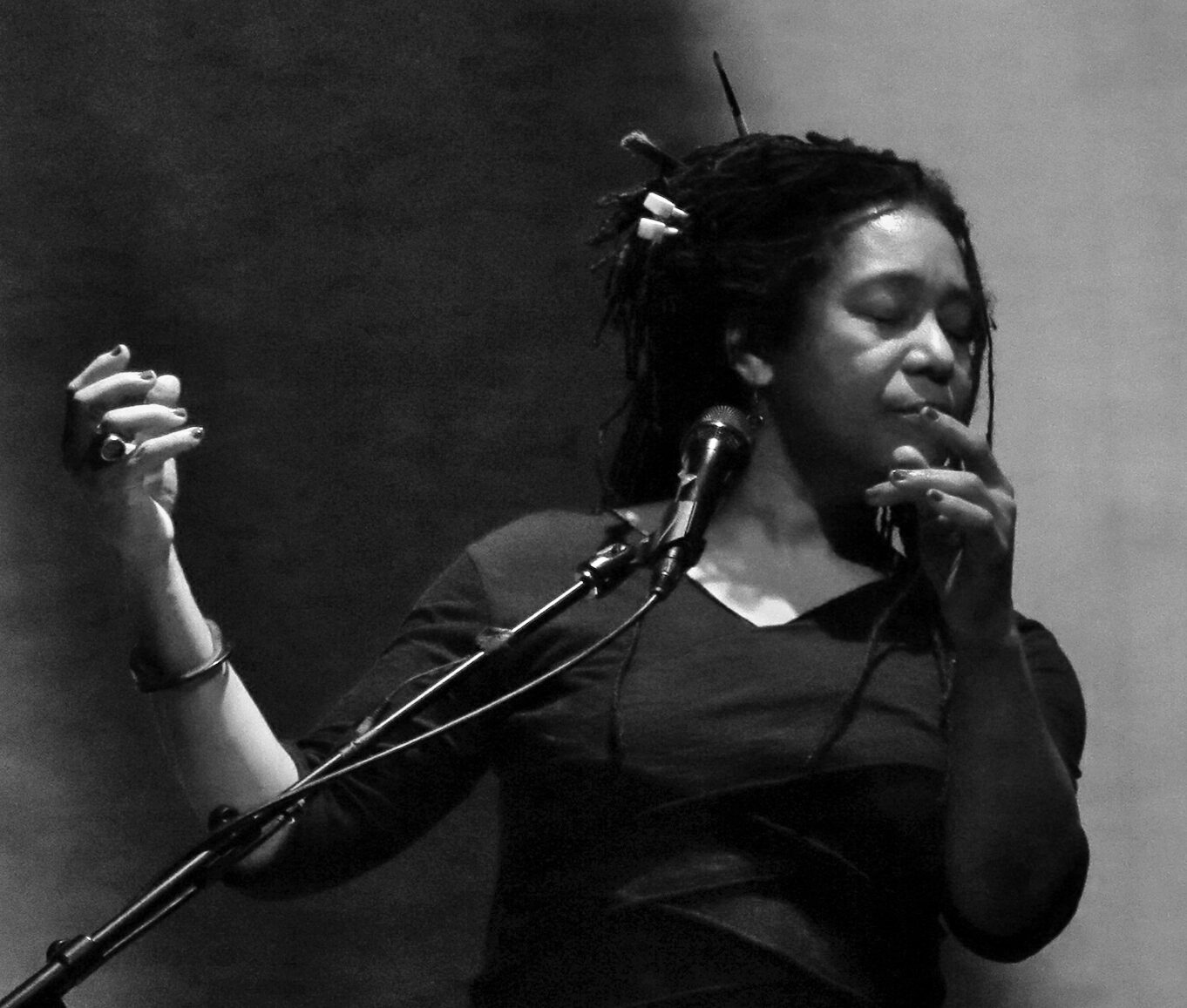
A presence long kept at the margins
The Always, Already There festival, held 23-25 October 2026 at the Barbican and the Guildhall School of Music & Drama in London, offers a rare chance to revisit a musical history in which traditional classifications obscured the role of certain actors. Under the artistic direction of Elaine Mitchener, the event brings together works by African and Afro-descendant composers from several generations, from Ben Patterson, Dorothy Rudd Moore and Olly Wilson to Pamela Z, Hannah Kendall, Jessie Cox and Charles Uzor. The official programme confirms the concerts, talks and installations; it does not, in itself, constitute a critical account of their performance.
The festival’s title points to a historical presence that has long been underestimated. These artists are not entering today a field from which they were previously absent. They helped transform its languages and, at times, shift its boundaries. At stake is not only their presence in music history, but also how that presence has been recognised, classified, and transmitted. Can a work be recognised for what it invents when its author is first assigned to an origin presumed to determine their language?
The invisible borders of contemporary music
Black musicians have often been associated with genres treated as distinct from Western art music. Jazz, gospel, blues and African musical traditions have been recognised as rich traditions, but that recognition has sometimes functioned as a boundary. An artist could be celebrated as an improviser without being welcomed on the same terms as an experimental composer. The issue is not to deny the existence of particular traditions, but to understand why identifying them sometimes becomes a limit imposed on those who come from them.
Aesthetic assignment
A European composer using electronic techniques or graphic scores is generally described in relation to the aesthetic problems addressed by the work. An Afro-descendant musician using comparable methods is often presented through the prism of cultural identity, even when that identity neither exhausts the artist’s means nor intentions. This asymmetry does not make every reference to origin improper. Cultural inheritances can constitute essential material for creation. It becomes problematic when origin is treated as the exclusive explanatory principle.
The artist is then no longer free to displace the traditions associated with them. They are invited to represent those traditions and sometimes to guarantee their “authenticity”. Yet avant-gardes have defined themselves by transgressing inherited rules. Some creators therefore had to confront identity boundaries that institutions supposedly devoted to celebrating experimentation kept reproducing.
A history that was never entirely absent
The London programme brings together trajectories that make a homogeneous Black avant-garde impossible to describe. Ben Patterson belongs to the history of Fluxus, a movement that challenged boundaries between music, performance and the visual arts. Dorothy Rudd Moore helped develop spaces for Black composers in the United States. Anthony Braxton created a body of work situated at the border between improvisation and composition. Alice Coltrane developed a practice in which instrumental experimentation and spirituality maintain complex relations.
These artists do not represent a single aesthetic. Bringing them together reveals a common difficulty: the categories used to identify them have not always captured their innovations. Improvisation, electronics, vocal music, open scores and instrumental composition coexist at the festival without being reduced to a single style. The question is not to define an essence of the Black avant-garde, but to understand why different creators encountered similar barriers to access within the institutions of contemporary music.
The power to name works
The terms “classical”, “contemporary”, “experimental”, “popular” and “ethnic” music do not refer only to acoustic properties. They also refer to performance venues, funding structures, professional training and audiences. A work programmed in a specialist concert hall does not acquire the same institutional meaning as when it is presented at a community festival.
Pierre Bourdieu’s work on the production of cultural value helps illuminate this dimension without reducing works to their social conditions. Institutions of consecration organise artists’ visibility; they do not by themselves create aesthetic value. A critique of hierarchies therefore cannot substitute an examination of authors’ identities for an examination of the works themselves. It should allow us to study creations with comparable standards, regardless of the creator’s social background.
George Lewis and the critique of a selective history
Composer, improviser, and scholar George E. Lewis has devoted much of his work to the relations among experimentation, African-American history, and musical institutions. His 1996 essay, Improvised Music after 1950: Afrological and Eurological Perspectives, shows that discourses on improvisation rest on different intellectual traditions and historical assumptions. The distinction between Afrological and Eurological perspectives is not a racial separation of practices; it questions narratives that privilege certain experiences.
In A Power Stronger Than Itself (2008), Lewis studies Chicago’s Association for the Advancement of Creative Musicians and the autonomous institutions African-American musicians created. Marginalised artists did not simply wait to be admitted into dominant circuits: they founded collectives, networks and forms of transmission that made their research possible. The avant-garde also took shape in sometimes precarious spaces where experimentation responded to artistic and institutional necessities.
Black creation is not a genre in itself
Pamela Z’s vocal and electronic practice cannot be explained in the same terms as Olly Wilson’s compositions or Hannah Kendall’s instrumental research. These works may relate to shared histories without addressing the same questions. Identifying an Afro-descendant tradition should therefore not create an artificial aesthetic unity.
The same caution applies to African arts as a whole. The diversity of the continent’s languages, societies, and historical trajectories makes reducing African creation to a few general characteristics problematic. No single African music exists, just as no uniform African philosophy exists. Traditions can share historical experiences without losing their plurality.
The ambiguities of institutional recognition
By devoting several days to these works, the Barbican gives them visibility they have long lacked in contemporary-music programming. It would nevertheless be premature to conclude that traditional hierarchies have been overturned. An exceptional festival can provide considerable visibility without durably transforming programming, training and preservation practices.