
Current Affairs & Debate · Merisphere Weekly
Tshisekedi: Has the Great Disclosure Begun?
Searches in Belgium, allegations of family enrichment and diplomatic tensions. Beyond the judicial proceedings, the relationship between political power and public wealth in the Democratic Republic of the Congo has once again come to the forefront.
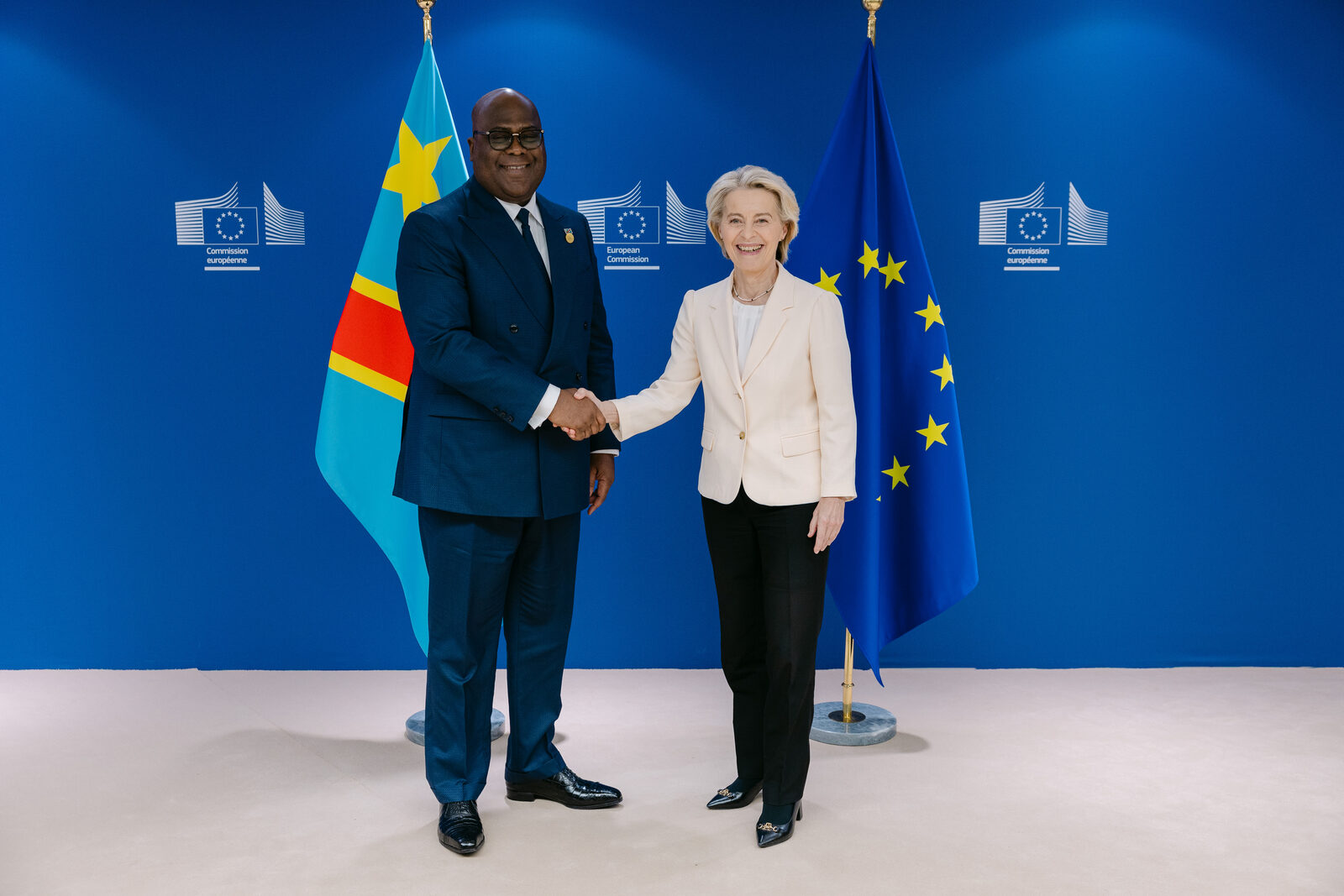
On 14 October 2026, Belgian judicial authorities carried out several searches in Brussels and in Walloon and Flemish Brabant as part of an investigation opened following a complaint concerning members of the family and entourage of Congolese President Félix Tshisekedi. The investigation concerns, in particular, suspicions of money laundering linked to the exploitation of mineral resources in the Democratic Republic of the Congo. Lodged on 8 July 2025 by civil-society organisations from Katanga, represented by lawyers in Belgium, the complaint also alleges corruption, misappropriation and other financial offences. The Belgian Federal Prosecutor’s Office confirmed the searches without publicly identifying all the persons concerned.
The case quickly took on a political dimension. Among the relatives named by the complainants is Denise Nyakeru Tshisekedi, the Head of State’s wife, who rejected the allegations made against her. The Congolese President, who was not directly targeted by the searches, responded by asking for the suspension of contacts between his government and the Belgian Embassy in Kinshasa. The Belgian Foreign Minister challenged this decision, turning a judicial proceeding into a diplomatic incident. A few days later, the Union for Democracy and Social Progress (UDPS), the presidential party, denounced what it described as an attempt at political destabilisation.
Belgian justice will have to determine whether the suspicions are supported by facts that constitute criminal offences. At this stage, the searches alone do not establish guilt. Yet the case's significance does not depend solely on its judicial outcome. It highlights the fragilities of the Congolese State and how its leaders have responded to allegations about managing national wealth.
An investigation that goes beyond the family circle
In a democracy, the family of a Head of State does not, merely because of its proximity to power, constitute a class of suspects. Its members retain the same rights as other citizens, including the right to own property, conduct business and benefit from the presumption of innocence. However, it should also be recalled that such proximity requires particular vigilance when their economic activities concern sectors under the direct or indirect responsibility of public authorities.
The allegations brought before the Belgian courts concern, in particular, the boundary between private economic activities and public responsibilities.
For clarity, the Congolese mining sector is not an ordinary area of economic activity. It accounts for an essential share of the country’s export earnings, mobilises considerable capital and shapes the DRC’s relations with the major industrial powers. Copper and cobalt, in particular, occupy a strategic place in international production chains. Decisions concerning concessions, partnerships, operating authorisations and mining taxation can therefore confer considerable economic advantages on their beneficiaries.
In these circumstances, relations between holders of political power and economic operators require particular transparency. The formal legality of transactions does not remove the need to examine the conditions under which contracts were concluded, the identity of their beneficial owners and any advantages granted by the competent authorities to particular interests. Such scrutiny must include parliamentary debate.
The organisations behind the complaint denounce practices which they consider to amount to the unlawful appropriation of mineral wealth. Their allegations must be examined in adversarial proceedings. They cannot be regarded as proven merely because an investigation has been opened.
Where does the rule of law stand in the DRC?
It is striking that these economic operations have been challenged in a Belgian court, even though the DRC has its own oversight institutions and repeatedly proclaims that the rule of law has returned.
The answer lies partly in the legal connecting factors the complainants invoked, including the Belgian nationality of several persons concerned. This does not, in itself, justify concluding that Congolese courts are incapable of acting. It does, however, reveal a broader reality. When confidence in national oversight mechanisms is weak, social actors seek other institutional arenas in which to have their grievances examined.
Recourse to a foreign court also raises questions about confidence in the Congolese institutions responsible for overseeing economic power.
From Mobutu to Tshisekedi: the enduring reality of widespread poverty
For decades, the Democratic Republic of the Congo has shown a stark contradiction between the scale of its natural resources and the limited share of benefits the majority of its population receives.
Under Mobutu, the concentration of political power was accompanied by a blurring of State resources, networks of loyalty and the regime’s private interests. Power did not merely administer the national economy. It distributed opportunities for enrichment, organised access to economic positions and made proximity to the authorities a decisive factor in material success.
The fall of the Mobutu regime did not eradicate the structures that made such practices possible.
Wars, political transitions and institutional reconfigurations changed the dominant groups without fundamentally altering the conditions under which access to public resources was negotiated. Mining companies, concessions, public contracts and import circuits continued to occupy a central place in relations between political power and private accumulation.
It would be excessive to treat every Congolese government as identical, indifferent to political and legal change. Institutional transformations have occurred, and economic actors cannot all be equated with power networks. Yet the fundamental question remains.
The 2019 transfer of power had precisely raised hopes that these practices would change. Félix Tshisekedi’s accession to the presidency, after years of Joseph Kabila’s rule, seemed to offer a break from the mechanisms of domination that had long characterised Congolese political life.
Political change, however, cannot be measured simply by replacing leaders. It requires the rules governing public resources to apply regardless of who holds power. It requires oversight bodies to enjoy genuine autonomy and judicial procedures to reach the most influential personalities without becoming instruments for settling political scores. The Belgian case indirectly confronts the current government with that requirement.
The allegations against certain members of President Tshisekedi’s entourage do not prove that the alleged practices occurred. They do, however, require scrutiny of the institutional safeguards that were supposed to prevent them.
Congolese institutions themselves should have examined any potentially irregular enrichment, free from political interference, including when it concerns persons close to Félix Tshisekedi.
From judicial case to diplomatic conflict
The Congolese authorities' reaction revealed a degree of nervousness that fuels suspicion and raises questions about the immediate politicisation of a judicial matter.
The day after the searches, the announced suspension of contacts with the Belgian Embassy gave the proceedings significance beyond the individuals directly concerned and affected relations between two States.
The Congolese government may legitimately defend national sovereignty and protest against any foreign interference. The history of relations between Belgium and the Congo requires particular care on this point. The former colonial power long exercised political and economic influence, the consequences of which continue to weigh on relations between the two countries.
Nevertheless, it would be problematic to regard judicial proceedings concerning nationals or residents within the jurisdiction of a Belgian court as, in themselves, an infringement of Congolese sovereignty. Such an interpretation would subordinate judges' work to diplomatic relations between governments.
Judicial independence requires political authorities to be unable to halt an investigation simply because it concerns people close to a foreign government. Conversely, that independence does not exempt judges from respecting procedural safeguards, the rights of the defence and the applicable rules of jurisdiction.
By immediately shifting the controversy into the diplomatic arena, the Congolese authorities risk turning the defence of private individuals into a matter of State. This confusion may produce political effects regardless of the investigation's outcome. In any event, it reinforces the impression that the interests of those in power and those of their entourage are not sufficiently distinct. This is a major institutional difficulty. In a State where public functions are clearly separated from private interests, investigating a person close to the President should not automatically trigger a crisis between two governments.
Mineral wealth and its beneficiaries
The Tshisekedi affair comes at a time when the world is paying renewed attention to Congolese mineral resources.
The energy transition, the electrification of transport and the transformation of the defence and digital technology industries are increasing the strategic value of several minerals extracted in the DRC.
This situation could offer the country considerable opportunities for industrial development, public investment and economic transformation.
But abundant resources do not automatically produce collective prosperity.
Everything depends on the conditions under which those resources are exploited, how revenues are distributed, and the State’s capacity to convert sale receipts into public goods and services.
Corruption therefore cannot be separated from the economic model.
When restricted networks capture mining revenues, the problem is not limited to the possible irregularity of particular transactions. The very function of national wealth is diverted.
Natural resources then cease to be regarded primarily as a means of financing collective needs. They become an instrument for consolidating economic and political positions.
This dynamic can also develop through formally lawful operations. Unbalanced contracts, excessive tax advantages, or disposal terms unfavourable to the State can cause considerable losses without necessarily amounting to a criminal offence.
“A distinction must therefore be drawn between the legality of operations, their administrative regularity and their actual contribution to the national interest.”
Examining allegations against people close to the President cannot replace a comprehensive assessment of mining policy. It can, however, help reopen discussion about access to concessions, the transparency of financial holdings and the destination of public revenues.
In this respect, identifying the beneficial owners of companies operating in strategic sectors is a major issue. It allows us to look beyond legal appearances and determine who actually controls companies, who benefits from their activities, and what links their owners may have to the authorities responsible for regulating them.
Such a requirement does not concern the presidential entourage alone. It must apply to all economic operators, national and foreign.
So, has the “great disclosure” begun?
Speaking of a “great disclosure” might suggest that the searches in Belgium herald a series of revelations about the fortunes of Congolese politicians surrounding President Tshisekedi. Nothing yet allows such a conclusion. A judicial investigation is neither a public inventory of public figures' assets nor a procedure designed to reveal a regime's economic practices. It concerns specific facts and must satisfy evidential requirements. However, the expression takes on a different meaning when placed within Congo’s political history. Since independence, regime changes have repeatedly been accompanied by denunciations of previous leaders' economic practices. Criticism of the enrichment of those in power has often served to legitimise the arrival of new rulers. The current affair could open a more productive debate, provided it is not reduced to a confrontation between supporters and opponents of the President. Institutions are not meant to protect one camp against another, but to enable facts to be examined regardless of the identity of those concerned.
Belgian judicial proceedings will take their course. Its conclusions cannot be anticipated. It remains to be hoped that political debate around the case in the DRC will finally lead to scrutiny of national resource management, the transparency of the economic activities of those close to power, and the independence of oversight mechanisms.