
Current Affairs & Debate · Opinion
Has France Become a Country Dominated by Racism?
Only a few years ago, this question would undoubtedly have provoked indignation among those for whom the homeland of human rights could not possibly be suspected of such a development. Yet today it deserves to be asked. Not because France has suddenly repudiated the principles on which its political existence has rested since the Revolution of 1789, but because the gap between those principles and certain realities of national life has become too troubling not to question the direction the country is taking.
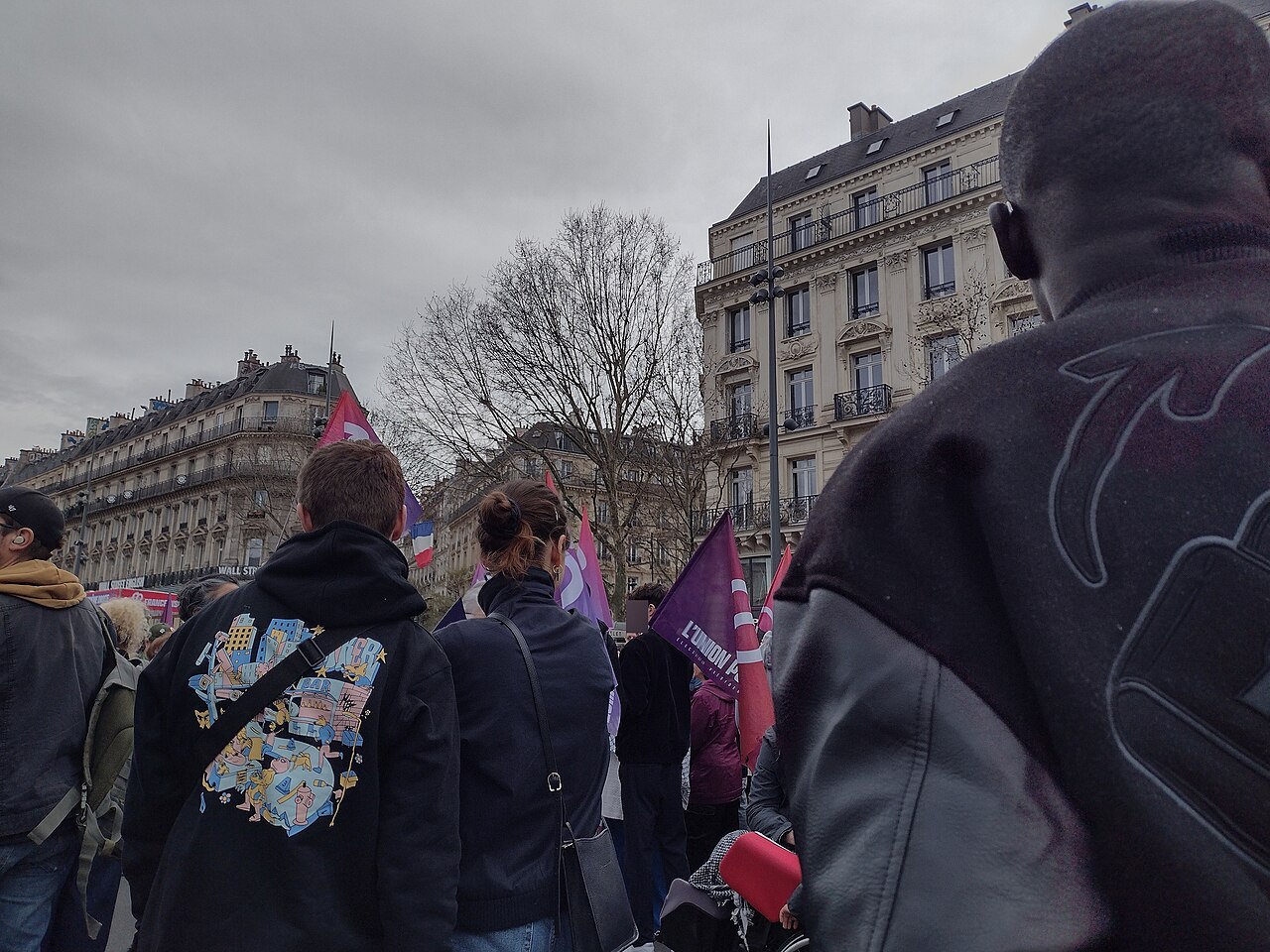
On 23 October 2026, a deadly attack in Trappes and La Verrière, in the Yvelines department, claimed the life of 26-year-old Pengo Bossio Wangi and left several people injured. France’s National Anti-Terrorism Prosecutor’s Office took charge of the investigation, and the initial information made public suggests that the victims were targeted because of their origin or presumed religion. The courts will determine responsibility and the final legal classification of the offences.
Unfortunately, this tragedy did not occur in a vacuum. According to the annual report of the National Consultative Commission on Human Rights (CNCDH), the Ministry of the Interior recorded 9,737 racist, xenophobic or anti-religious crimes and offences in 2025, an increase of 5% on the previous year. These figures do not capture the full extent of discrimination and violence experienced, since not every incident is reported. Nevertheless, they show that attacks based on origin, skin colour, or religion are not isolated occurrences.
Racist violence is an act of categorisation: it reduces the victim to the status of a representative of a group, making the individual disappear behind the category assigned by the aggressor. The victim is no longer a person with a history, a family and aspirations, but “a Black person”, “an Arab”, “a Jew” or “a Muslim”: a substitute for an entire community held responsible for some supposed wrongdoing.
The Changing Political Landscape under Emmanuel Macron’s Presidency
The representations that lead to such categorisation do not emerge from nowhere. Repeated political rhetoric sustains them, including speeches by accomplished orators and even by figures at the highest levels of the state. They are also nourished by broken promises, disillusionment and the employment crisis. Finally, they gain legitimacy through political conflict and the sclerosis of French, and indeed European, democracy.
The National Rally now occupies a central position in the race for the Élysée Palace, far removed from the electoral scores Jean-Marie Le Pen once achieved. Voting intentions measured in 2026 testify to the party’s nationwide establishment, even though they cannot predict the outcome of the 2027 presidential election. More significant still is the spread, beyond the far right and into the political centre and Socialist left, of themes and expressions long associated with it. The far right has thus injected a poison into its opponents: the impoverishment of public debate, increasingly centred on immigration alone.
After Class Struggle, Immigration as the Sole Framework for Understanding Society
The far right has imposed its conception of the conquest of power upon almost every French political party. According to this conception, immigration is the most effective means of reconnecting with the people and winning elections.
The immigration law of December 2023, controversies over national preference, and debates over foreign nationals’ access to certain social rights have shown how far the boundaries of political discourse have shifted. Politicians on the right and in the centre now adopt themes that were once largely confined to the far right.
This contagion extends even to certain Socialist politicians, who likewise present immigration primarily in terms of the difficulties it supposedly creates, rather than what it contributes: labour in occupations that struggle to recruit, beginning with construction; contributions to birth rates, culture and sport; and even the international standing of the French language in the competition between the world’s languages.
The point is not to make immigration a taboo subject. A democracy must be able to examine its economic, demographic, cultural and institutional consequences. But there is a fundamental difference between treating immigration as a phenomenon to be understood and turning it into the explanation for all France’s difficulties — in other words, into an ideology: the sole prism through which the world is viewed.
The Role of the Media in Shaping Ideologies
Such a development cannot occur without channels of influence in the public sphere. Edward Herman and Noam Chomsky demonstrated this in Manufacturing Consent: the media do not need to lie in order to shape public opinion; selecting subjects and repeatedly presenting them through the same interpretative frameworks may be enough.
The media therefore play a considerable role, not because they necessarily invent collective anxieties from nothing, but because they help determine the issues around which those anxieties are organised.
Repeated associations eventually acquire the appearance of self-evident truths. When a criminal’s foreign origin is regularly presented as the explanation for an offence, that origin may come to be regarded, in the collective imagination, as a presumed cause of criminality. When immigration, Islam and insecurity are continually linked, they eventually form, for part of the public, an apparently inseparable whole.
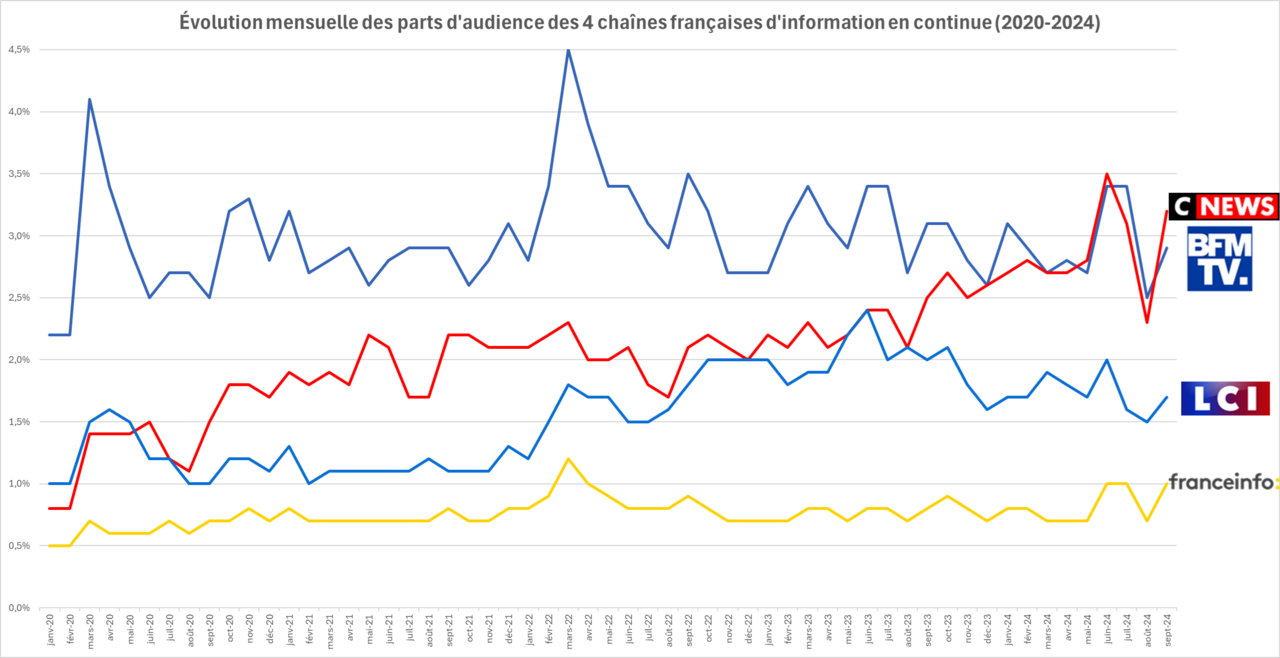
The controversies surrounding CNews illustrate the media's role in shaping and sustaining collective anxieties in France. Several broadcasts on immigration have led to decisions by Arcom, the French audiovisual and digital communications regulator.
But the issue extends beyond this single channel. It concerns the concentration of information resources and the power of economic groups that can operate simultaneously in the press, broadcasting, and publishing.
The Returns on Cultural Warfare
Vincent Bolloré’s group appears to have identified a promising new source of influence and opportunity. Known until a few years ago for its extensive activities in Africa — transport, logistics, port infrastructure and plantations — it has turned its attention towards the French media, from CNews and Europe 1 to Le Journal du dimanche.
This trajectory highlights a contradiction that extends beyond any single company.
For decades, Africa has provided French business groups with sources of supply, investment opportunities, trade routes and opportunities for capital accumulation. Economic relations between France and the African continent were shaped by colonisation, then extended and transformed after independence. African ports, commercial networks, natural resources and markets contributed to the expansion of economic powers that now occupy an important position within the French economy.
How, then, can one fail to notice the contrast between this long history of interdependence and contemporary rhetoric portraying the African presence in France as foreign to French history?
Is Africa acceptable only when it offers markets, resources and investment opportunities? Can capital cross borders while the people who help generate it are denied a legitimate place in the societies that benefit from it?
The point is not to confuse the rules governing capital flows with those regulating migration, but to recall that relations between societies do not begin when populations cross a border.
The African presence in France belongs to a much longer history of conquest, labour, wars, exchanges, migration and relations of domination. Treating it as an intrusion without historical precedent erases part of France’s own history.
This contradiction between principles, interests and practices is hardly new. It runs through European intellectual history, including the works of those who helped establish the foundations of modern liberty. Montesquieu provides a particularly revealing example.
Montesquieu, or the Contradictions of French Universalism
In The Spirit of the Laws, published in 1748, Book XV is devoted to civil slavery. Chapter V, entitled “Of the Slavery of the Negroes”, presents a series of arguments, several of which deny the very humanity of Africans.
The traditional interpretation sees this as an exercise in irony intended to expose the absurdity of pro-slavery justifications. Although this interpretation cannot simply be dismissed, it does not remove the need to examine other passages in Book XV, particularly those in which climate and working conditions are invoked to explain slavery.
The philosophical critique of servitude is accompanied by lines of reasoning whose implications remain problematic.
What is at stake here goes beyond the philosopher himself. The fundamental issue is the historical contradiction of French universalism: proclaiming principles supposedly valid for all humanity while participating in institutions that exclude part of it.
Ideas May Lie Dormant, but They Never Entirely Disappear
The catastrophes of the twentieth century, particularly racial persecution and the genocide perpetrated by the Nazi regime, profoundly discredited doctrines founded upon a supposed biological hierarchy.
Advances in genetics and anthropology, for their part, destroyed any claim that such doctrines could scientifically establish an intellectual or moral hierarchy between human populations.
But was it therefore reasonable to conclude that the ideas themselves had disappeared?
An ideology does not necessarily die with the language in which it first took shape. It may lose its scientific legitimacy while retaining its influence within collective representations.
Older doctrines can transform themselves, abandon their explicit biological justifications and reappear in other forms.
The notion of natural inequality between races may give way to the idea of an irreconcilable incompatibility between cultures. Fear of racial mixing may become fear of the disappearance of national identity. Racial hierarchy may be reformulated as an opposition between populations portrayed as homogeneous and mutually antagonistic.
The contemporary theory of the “Great Replacement” belongs to this ideological universe. It interprets demographic developments as the replacement of one population by another, transforming social phenomena into a narrative of threatened identity.
Ideas about race and religion were believed to have disappeared. Perhaps they had merely been lying dormant. The question remains why they are once again gaining an audience in France and elsewhere in Europe.
Real Tensions, Ideological Interpretations
Europe’s economic, demographic and social conditions have changed profoundly. The intensification of trade, the speed of transport, the instantaneous circulation of information and increased human mobility have brought societies closer together that were once separated by considerable distances.
This transformation is not merely an economic abstraction. It affects the concrete conditions of collective existence. Populations live within arrangements that have developed over time: the distribution of housing, the organisation of work, the capacity of schools and health services, linguistic practices, neighbourhood relations and cultural habits.
These arrangements are never fixed, but they provide a degree of continuity in social life. When mobility intensifies, particularly in certain areas and over relatively short periods, these arrangements may be disrupted.
Demand for housing and public services may increase; neighbourhood composition may change; schools and public administrations may face new needs. Cultural practices and social relationships also evolve.
It would be artificial to pretend that such transformations generate no tensions. They can do so. These tensions are not necessarily imaginary. They may be material, institutional or cultural. They may also coexist with significant economic, demographic and social benefits.
A society may benefit from the arrival of new populations while struggling to adapt, because the overall advantages of a transformation are not distributed evenly across geographical areas and social groups.
Differences in fertility rates between world regions also contribute to this issue. Many European countries have low fertility rates and ageing populations, while several African countries have much younger populations, even as demographic transitions proceed at different speeds.
These differences do not mechanically determine migration, which is also influenced by economic opportunities, public policies, conflicts and migration networks.
Nevertheless, they contribute to a perception of worldwide demographic transformations whose consequences raise questions within European societies.
The imbalances that may accompany these changes must therefore be taken seriously.
Pressure on housing, difficulties in accommodating pupils in schools or the rapid transformation of a neighbourhood may constitute very real social experiences.
To dismiss them systematically as mere prejudice would be to ignore the concrete conditions in which people live.
But acknowledging these tensions does not mean automatically attributing responsibility for them to newcomers. A housing crisis may result from increased demand, but also from insufficient construction, the concentration of employment and political decisions. Difficulties in schools may be aggravated by changing pupil numbers, but they also depend on the resources allocated to educational institutions.
Three things must be distinguished: the objective transformation of social conditions, the way populations experience that transformation, and the political interpretation offered to them.
Within the space between these three dimensions, old ideologies can regain their effectiveness.
When a population feels dislocated, a doctrine that identifies a collective culprit and promises a return to an earlier order may become attractive.
It reduces complex difficulties to an opposition between human groups. It gives a recognisable face to economic and social mechanisms that might otherwise seem difficult to understand or control.
Yet the passage from social tension to exclusion is not inevitable. It depends on institutions, public policies, solidarity and collective representations.
France, a Country That Also Knows How to Resist
France’s situation cannot be judged solely by disturbing rhetoric and developments. France is not merely a country in which doctrines of human hierarchy have found defenders. It is also a country in which powerful intellectual and political traditions of opposition have developed.
Condorcet denounced slavery. Victor Schœlcher campaigned for abolition. Aimé Césaire exposed the contradictions of a European civilisation that claimed to embody humanism while exercising colonial domination. Frantz Fanon analysed the violence racism inflicts upon bodies, consciousness and human relationships. Jean-Paul Sartre, Simone de Beauvoir and Albert Memmi each examined, in different ways, the mechanisms of oppression. Pierre Bourdieu demonstrated how social hierarchies reproduce themselves and how domination operates through categories that appear natural. Michel Foucault analysed how modern forms of power classify, administer, and differentiate populations, notably through state racism. Colette Guillaumin studied the social construction of racial categories. Étienne Balibar examined forms of racism that no longer express themselves in biological language.
Abdelmalek Sayad placed immigration at the centre of the historical relationship between societies of origin and host societies.
More recently, Didier Fassin and Pap Ndiaye have documented discrimination and minority experiences, while Emmanuel Todd contributes to debates on contemporary social and ideological transformations. Édouard Glissant and Patrick Chamoiseau, for their part, have explored relations, plurality and open forms of identity, providing grounds for challenging the notion that cultures are condemned to remain separate.
These thinkers do not constitute a single school. They share neither identical methods nor identical conclusions. But their presence in intellectual life bears witness to a continuing capacity to question the categories through which domination operates.
This resistance is not confined to books. It finds expression in anti-colonial struggles, in movements for equality such as the 1983 March for Equality and Against Racism, and in the work of associations, trade unions, teachers, journalists, magistrates and citizens who reject discrimination.
It also runs through the political sphere: Jean-Luc Mélenchon and other political figures from diverse traditions oppose national preference and defend equal rights, albeit from different political perspectives.
This is not a matter of granting anyone immunity from criticism on account of their declared commitments.
But French society cannot be understood if the forces opposing exclusionary rhetoric are erased from the picture.
Opinion surveys themselves call for caution. According to the CNCDH, the Longitudinal Tolerance Index stood at 64 out of 100 in 2025, one of the highest levels recorded since measurements began.
This survey-based indicator does not, of course, measure the same phenomena as statistics on violence and discrimination.
The coexistence of a relatively high level of declared tolerance and a substantial number of racist offences demonstrates that a society can make progress in its attitudes while remaining affected by exclusionary practices.
It would therefore be mistaken to conclude that the electoral advance of the far right, or the visibility of racist rhetoric, necessarily reflects a general embrace of racialist ideology by the French population.
This observation in no way diminishes the seriousness of the dangers. It requires us to recognise that contradictory tendencies are operating simultaneously within society.
In my view, the answer to the initial question lies in this contradiction.
Neither a Racist Country nor an Innocent One
Is France a racist country? No.
But a country marked by profound contrasts: a country where ideas once thought to have disappeared are once again attracting considerable support; where economic and demographic transformations generate real tensions; and where republican principles do not always prevent discrimination.
History demonstrates how far declarations of principle can diverge from actions.
In this respect, France resembles some of its great thinkers: admirable in theory, disappointing in practice.
Montesquieu, a philosopher of liberty and a magistrate in a city enriched by the slave trade, is scarcely known for any commitment against the slave economy.
Likewise, the founders of the Republic proclaimed equality while administering territories subject to unequal legal regimes.
Contemporary France affirms the universality of human rights while confronting practices that restrict their effective enjoyment.
Must we therefore conclude that republican principles are merely illusions?
I do not believe so.
For French history is not only the history of its contradictions. It is also the history of the forces that periodically rise up against them.
Resistance is not a state of original innocence, but the capacity to oppose even what one’s own society has produced.