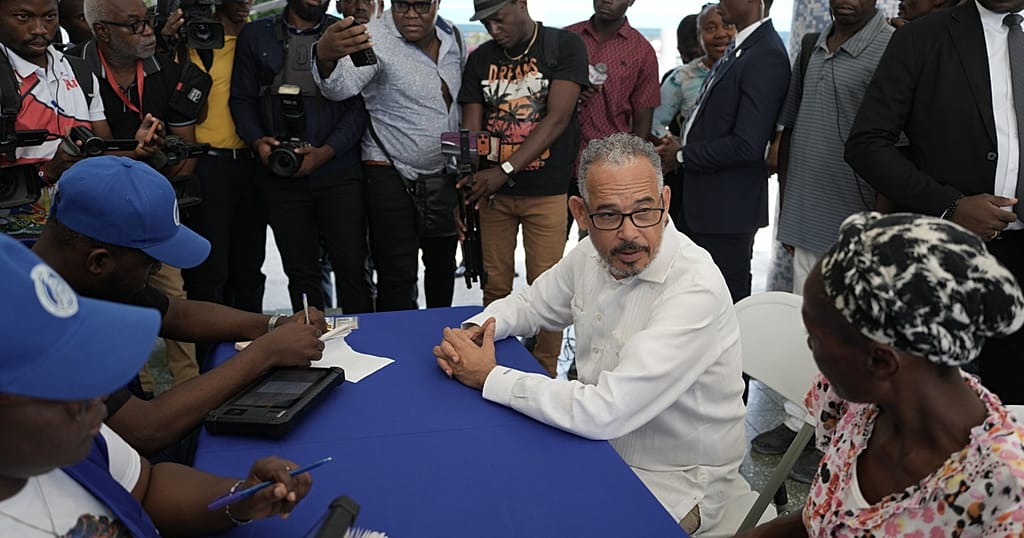
Haiti has not held a national election for almost a decade. Following the assassination of President Jovenel Moïse in July 2021, the transition dragged on amid political crises and the expansion of armed groups. The mandate of the Transitional Presidential Council ended in February 2026 without the promised elections having taken place. Executive power is now exercised by the Council of Ministers led by Prime Minister Alix Didier Fils-Aimé.
In a country that has lacked elected leaders for so long, every postponement raises a question of legitimacy. But holding the poll under current conditions raises another: what is an election worth if some citizens cannot participate freely?
The ballot paper against the guns
The problem is not confined to protecting polling stations on election day. An election begins much earlier. People must be able to register, travel, hold meetings, campaign, distribute leaflets, listen to candidates, challenge the government and reach a polling station without asking permission from an armed group.
Violence is no longer confined to a few districts of the capital. Gangs have intensified operations in rural areas, with kidnappings, cattle theft and roadblocks. Clashes and security operations killed more than 3,000 people in the first half of 2026. Nearly 1.5 million people have been displaced.
Mass displacement creates an electoral problem in itself. Where does someone vote when they no longer live at the address where they are registered? How can electoral rolls be updated when families move repeatedly to escape violence? How can candidates be guaranteed equal access to the territory?
In July, Haiti’s foreign minister told the Security Council that seven of the ten departments could host electoral activity without major security obstacles, while the other three required reinforced security.
Haiti therefore faces two risks: waiting for perfect security could mean waiting indefinitely; voting too soon could produce an election from which part of the country would, in practice, be excluded.