
Home › African Current Affairs & Politics › AFRICAN CURRENT AFFAIRS
AFRICAN CURRENT AFFAIRS
African debt — Revised sustainability criteria reshape borrowing headroom
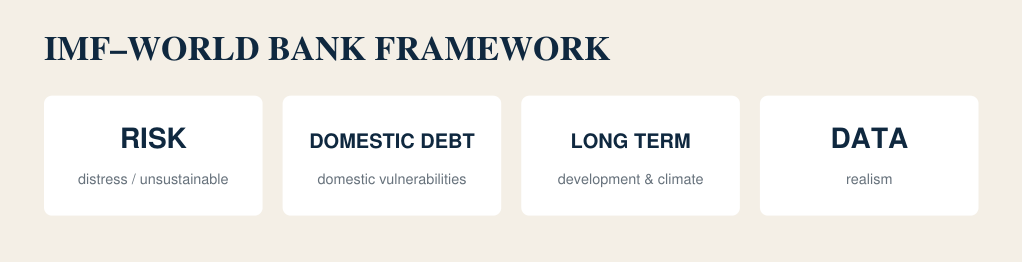
THE IMF AND WORLD BANK ARE REVISING THE FRAMEWORK USED TO ASSESS DEBT IN LOW-INCOME COUNTRIES. THE REFORM IS INTENDED TO DISTINGUISH MORE CLEARLY BETWEEN THE RISK OF DEBT DISTRESS AND DEBT THAT IS ACTUALLY UNSUSTAINABLE, WHILE GIVING GREATER WEIGHT TO DOMESTIC DEBT AND LONG-TERM INVESTMENT NEEDS.
The framework used since 2005 is changing
The Low-Income Country Debt Sustainability Framework has underpinned IMF and World Bank assessments since 2005. It informs their policy advice and financing decisions and, beyond the two institutions, influences how other lenders assess risk. Its last major overhaul was in 2017. Since then, borrowing costs have risen and sources of finance have become more diverse.
Domestic debt enters more fully into the risk assessment
The 2026 review broadens the treatment of vulnerabilities arising from domestic debt. It is also intended to draw a clearer distinction between countries at risk of debt distress and those whose debt is already considered unsustainable. This may alter assessments of the fiscal room available for infrastructure, climate adaptation and other long-term development investment.
States still decide what borrowing is used for
A more refined analytical framework does not remove the underlying choices. African states need capital to build electricity networks, roads, schools, health systems and productive capacity. Borrowing can finance those investments, or merely postpone existing imbalances. The decisive considerations are how the funds are used, the currency in which debt is contracted, its cost and maturity, and the economy’s capacity to generate the future revenue required to service it. The reform of the Bretton Woods institutions may allow for a less mechanical reading of risk. It cannot substitute for a national financing strategy.
AFRICAN CURRENT AFFAIRS
African debt — Revised sustainability criteria reshape borrowing headroom
THE IMF AND WORLD BANK ARE REVISING THE FRAMEWORK USED TO ASSESS DEBT IN LOW-INCOME COUNTRIES. THE REFORM IS INTENDED TO DISTINGUISH MORE CLEARLY BETWEEN THE RISK OF DEBT DISTRESS AND DEBT THAT IS ACTUALLY UNSUSTAINABLE, WHILE GIVING GREATER WEIGHT TO DOMESTIC DEBT AND LONG-TERM INVESTMENT NEEDS.
The framework used since 2005 is changing
The Low-Income Country Debt Sustainability Framework has underpinned IMF and World Bank assessments since 2005. It informs their policy advice and financing decisions and, beyond the two institutions, influences how other lenders assess risk. Its last major overhaul was in 2017. Since then, borrowing costs have risen and sources of finance have become more diverse.
Domestic debt enters more fully into the risk assessment
The 2026 review broadens the treatment of vulnerabilities arising from domestic debt. It is also intended to draw a clearer distinction between countries at risk of debt distress and those whose debt is already considered unsustainable. This may alter assessments of the fiscal room available for infrastructure, climate adaptation and other long-term development investment.
States still decide what borrowing is used for
A more refined analytical framework does not remove the underlying choices. African states need capital to build electricity networks, roads, schools, health systems and productive capacity. Borrowing can finance those investments, or merely postpone existing imbalances. The decisive considerations are how the funds are used, the currency in which debt is contracted, its cost and maturity, and the economy’s capacity to generate the future revenue required to service it. The reform of the Bretton Woods institutions may allow for a less mechanical reading of risk. It cannot substitute for a national financing strategy.
Verification: IMF, 2026 Review of the Low-Income Countries Debt Sustainability Framework, September 2026.