
Home › African Current Affairs & Politics › AFRICAN CURRENT AFFAIRS
AFRICAN CURRENT AFFAIRS
South Sudan — Elections move ahead without a permanent constitution or census
AN AMENDMENT TO THE ELECTORAL LAW ALLOWS ELECTIONS TO BE HELD WITHOUT WAITING FOR THE PERMANENT CONSTITUTION OR NATIONAL CENSUS TO BE COMPLETED. THE GOVERNMENT INTENDS TO PRESERVE THE DECEMBER TIMETABLE. THE CREDIBILITY OF THE POLL WILL NOW DEPEND HEAVILY ON HOW IT IS ADMINISTERED IN PRACTICE.
The constitution and census are no longer prerequisites for the election
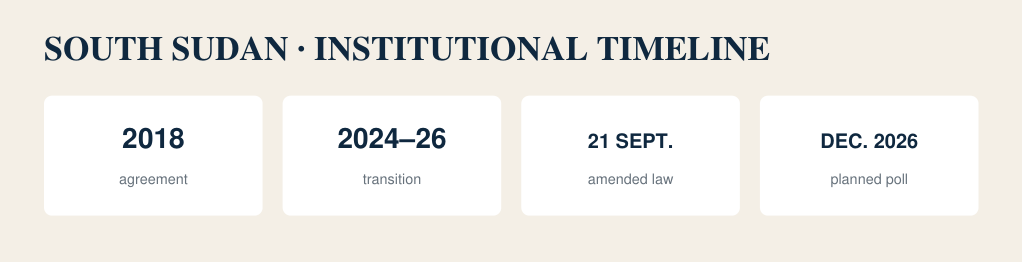
President Salva Kiir promulgated the amended electoral law on 21 September. The legislation now separates the holding of elections from the permanent constitution-making process and the national census. It keeps the executive in office with its full powers until the next elected president takes office.
The executive retains its powers until the elected president takes office
The law also allows the President, during the three months preceding the election, to remove the First Vice-President and Vice-Presidents in accordance with the Transitional Constitution. That provision does not, in itself, determine the quality of the forthcoming election. It is, however, part of the institutional framework within which the contest will take place.
Registration, security and counting still have to be organised
After years of transition, holding an election responds to a genuine expectation. What it delivers will depend on voter registration, security, candidates’ access to different parts of the country, freedom to campaign, the counting process and avenues for legal challenge. Independence in 2011 created the South Sudanese state. Consolidating its political sovereignty now requires institutions capable of organising a contest whose procedures are accepted by those taking part.
AFRICAN CURRENT AFFAIRS
South Sudan — Elections move ahead without a permanent constitution or census
AN AMENDMENT TO THE ELECTORAL LAW ALLOWS ELECTIONS TO BE HELD WITHOUT WAITING FOR THE PERMANENT CONSTITUTION OR NATIONAL CENSUS TO BE COMPLETED. THE GOVERNMENT INTENDS TO PRESERVE THE DECEMBER TIMETABLE. THE CREDIBILITY OF THE POLL WILL NOW DEPEND HEAVILY ON HOW IT IS ADMINISTERED IN PRACTICE.
The constitution and census are no longer prerequisites for the election
President Salva Kiir promulgated the amended electoral law on 21 September. The legislation now separates the holding of elections from the permanent constitution-making process and the national census. It keeps the executive in office with its full powers until the next elected president takes office.
The executive retains its powers until the elected president takes office
The law also allows the President, during the three months preceding the election, to remove the First Vice-President and Vice-Presidents in accordance with the Transitional Constitution. That provision does not, in itself, determine the quality of the forthcoming election. It is, however, part of the institutional framework within which the contest will take place.
Registration, security and counting still have to be organised
After years of transition, holding an election responds to a genuine expectation. What it delivers will depend on voter registration, security, candidates’ access to different parts of the country, freedom to campaign, the counting process and avenues for legal challenge. Independence in 2011 created the South Sudanese state. Consolidating its political sovereignty now requires institutions capable of organising a contest whose procedures are accepted by those taking part.
Verification: South Sudan Broadcasting Corporation, promulgation of the amended electoral law, 21 September 2026.